Best Time to Visit Patagonia for Hiking, Month by Month
Every month in Patagonia rated for hikers on wind, daylight, temperature and crowds, with 2026 opening dates for the W Trek, the O Circuit and each refugio.
Quick links
Don't want to read all this?
We've planned 2,000+ hiking trips. Send your dates, fitness and group size — we'll map the route and book every night.
A December day and an April day on the W Trek feel like two different trips. In December the sun is up for 16½ hours and gusts can stop you mid-stride; in April the beech woods turn red and frost lines the trail.
For most hikers the best time to visit Patagonia is late November or the first half of March, when every refugio is open and the trails are less crowded. December and January bring the longest days and the most wind, and May to August the calmest air, with guides only.
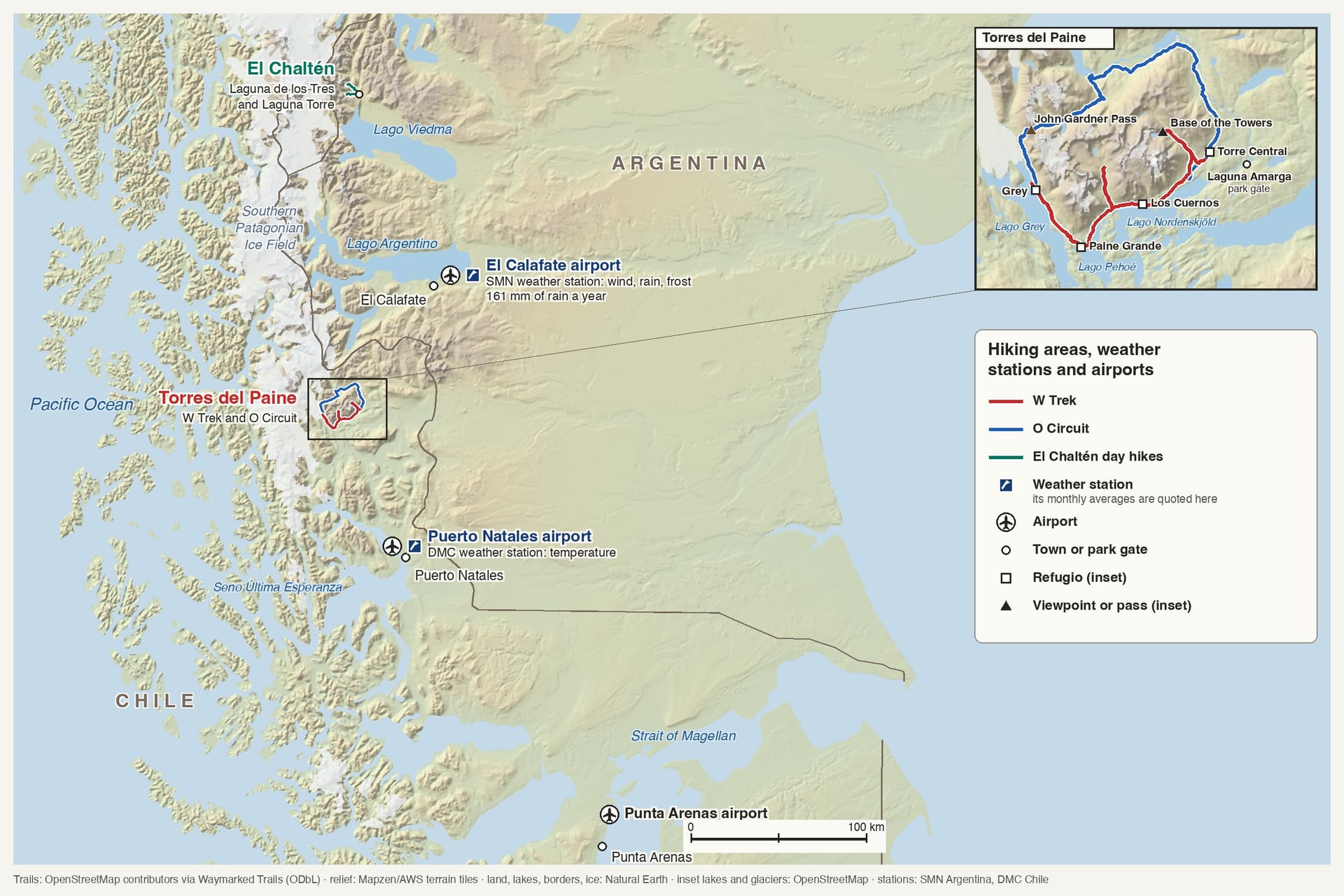
Torres del Paine in Chile and El Chaltén in Argentina share the same westerly wind, but their trails, beds and boats open on different dates, and those dates shape a trip as much as the weather.
Best Time to Visit Patagonia: Late November and the First Half of March
For a first W Trek, the best time to visit Torres del Paine is late November or early March. Los Cuernos, the refugio in its middle, opened only from 1 November to 30 March last season, so both windows put a bed at every stop outside the December and January peak.
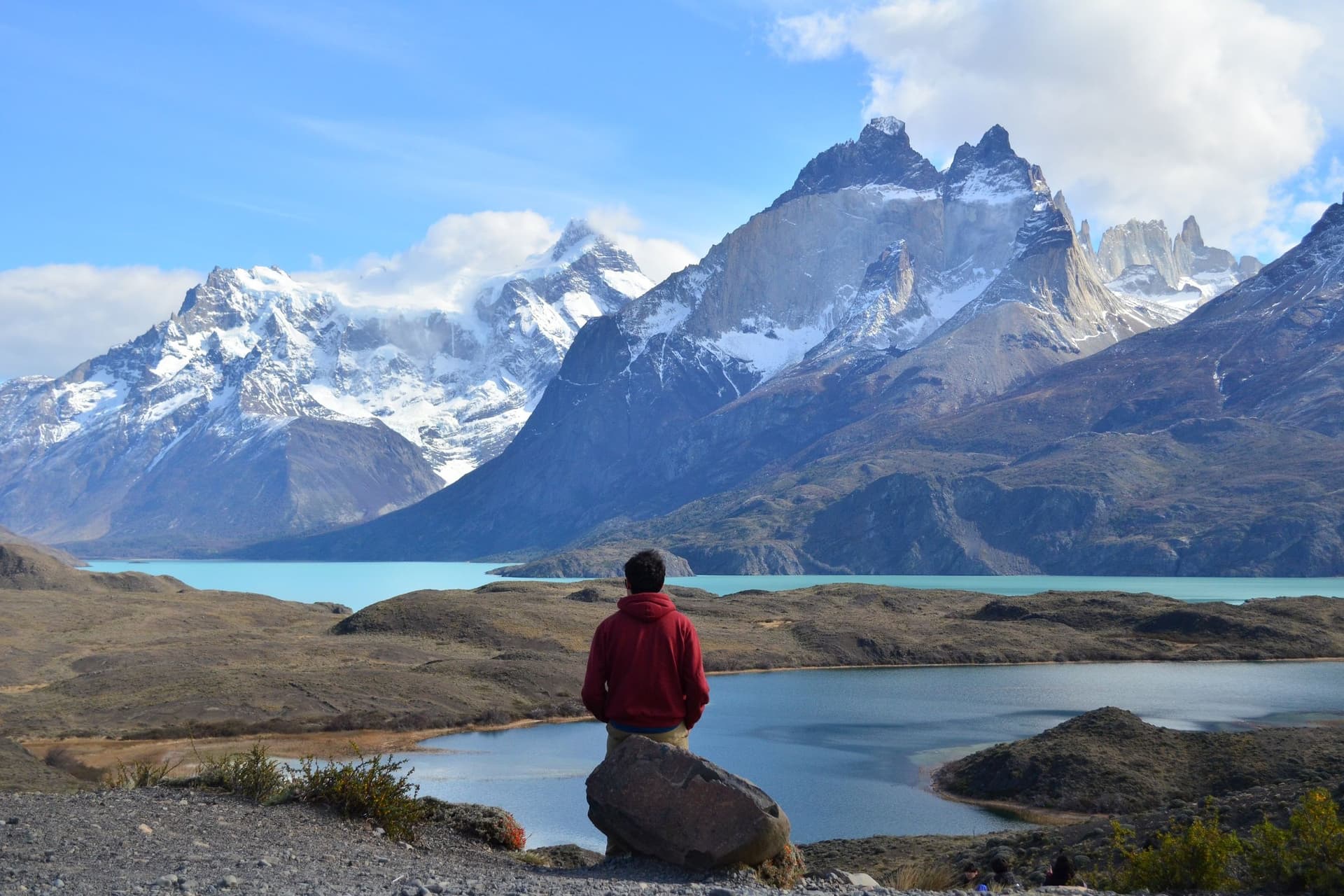
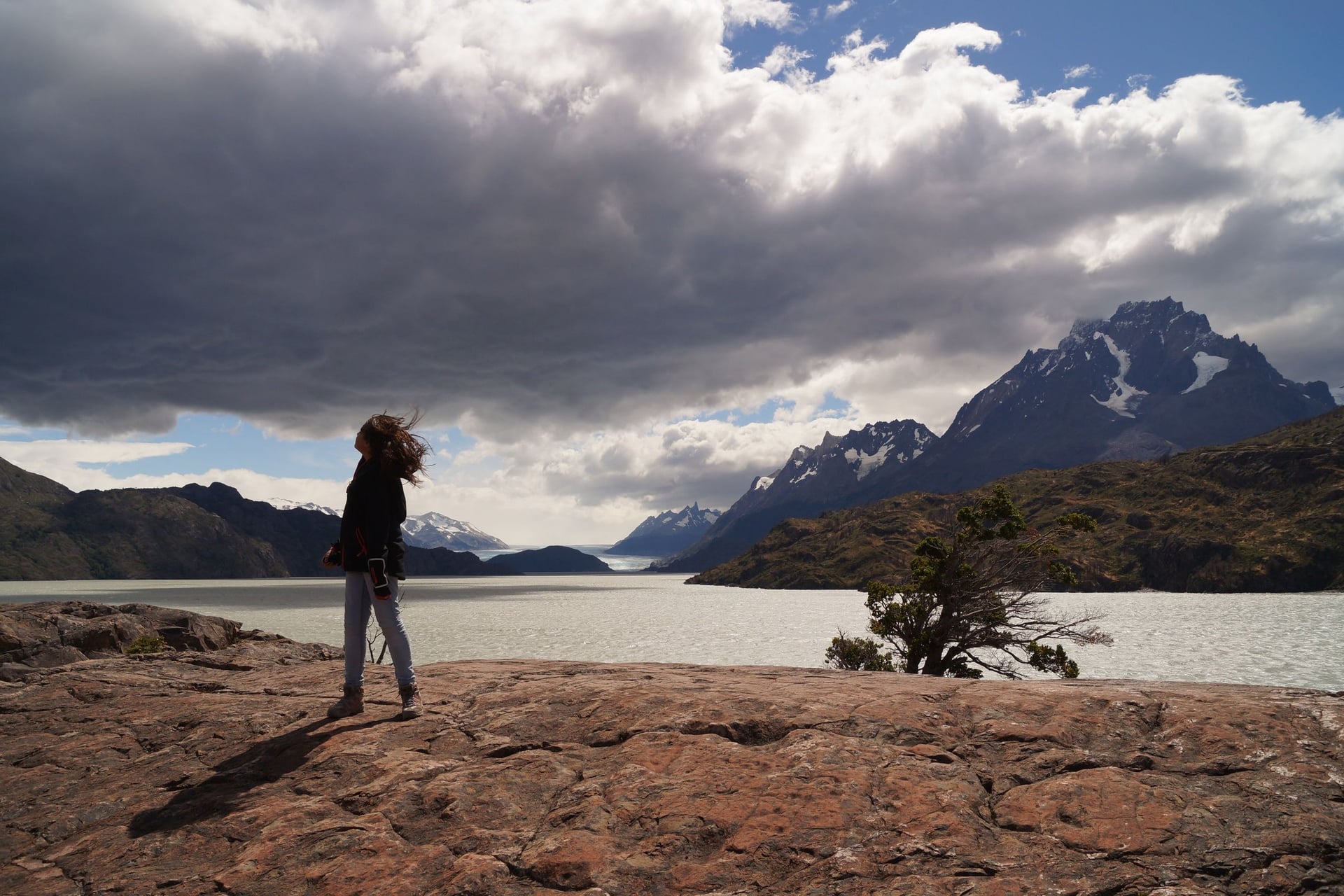
Midsummer is the windy option. El Calafate's airport averages 21.6 strong-wind days in December and 14.2 in March, so March gives the same trails with a third fewer windy days, and Puerto Natales still averages 18.1 °C by day.
For the O Circuit, January to mid-March is the safest window. In 2026 its self-guided season ran from 1 January until CONAF closed the circuit for snow and ice on 26 March, and CONAF keeps it closed until at least 31 October 2026.
The best time to go to Patagonia also depends on what you will trade, wind against cold and open beds against quiet trails.
Spring, September to November: the W Trek opens in stages, snow lingers on high ground and the wind builds to 20.1 strong-wind days in November.
Summer, December to February: the longest days, highs of 17 to 19 °C in Puerto Natales, every bed open and the most wind and crowds.
Autumn, March and April: calmer air, red beech woods and more frost, while the refugios close one by one.
Winter, May to August: the calmest months, with a guide required on the W Trek, the O Circuit shut and Paine Grande and Grey the only refugios listed as open.
Patagonia Month by Month
Patagonia's hiking year starts in September, when the snow retreats from the lower trails, and each month after that changes the wind, the light and the list of open refugios.
Month | Daylight | High / Low (°C) | Strong-Wind Days | What's Open | Verdict |
September | 11 h 38 | 12.2 / -0.5 | 11.9 | W Trek with a guide until 15 Sep 2026; O Circuit closed | Fair after mid-month |
October | 13 h 33 | 14.0 / -1.6 | 14.9 | W Trek without Los Cuernos; O Circuit closed | Good |
November | 15 h 25 | 15.6 / 2.0 | 20.1 | Every W Trek refugio; O Circuit after a CONAF check | Best late in the month |
December | 16 h 29 | 17.2 / 3.8 | 21.6 | Every refugio; O Circuit once CONAF opens it | Good, windy and busy |
January | 16 h 03 | 18.8 / 4.5 | 20.1 | Every refugio; O Circuit self-guided | Good, the busiest month |
February | 14 h 23 | 18.1 / 4.2 | 14.3 | Every refugio; O Circuit | Good |
March | 12 h 35 | 18.1 / 2.6 | 14.2 | Every refugio to 30 Mar; O Circuit closed 26 Mar 2026 | Best in the first half |
April | 10 h 36 | 14.3 / -0.3 | 10.5 | W Trek to about 25 Apr, no Los Cuernos; O Circuit closed | Fair |
May | 8 h 55 | 10.9 / -2.9 | 6.3 | W Trek and Base Torres with a guide; O Circuit closed | Guide only |
June | 7 h 57 | 6.9 / -4.0 | 7.7 | Only Base Torres, with a guide, in 2026 | Closed in 2026 |
July | 8 h 18 | 7.7 / -4.0 | 7.0 | Only Base Torres, with a guide, in 2026 | Closed in 2026 |
August | 9 h 45 | 8.9 / -3.3 | 9.7 | W Trek with a guide and registration; O Circuit closed | Guide only |
Daylight is sunrise to sunset in Torres del Paine on the 15th. Temperatures are Puerto Natales averages for 1991-2020 from Chile's weather service (DMC), and wind days come from El Calafate airport's 2011-2020 records.
That airport sits on the steppe east of the Andes, so read the wind column as a pattern for the region rather than a forecast for a pass. The wind builds from September to a December peak and is lowest in May.
September: Guide Rule Ends Mid-Month
Season: spring, as the snow retreats from the lower trails
Sunshine: 6.4 hours a day at El Calafate
Average wind: 16.0 km/h at El Calafate
Frost and snow: 18.9 frost days and 1.3 snow days
Beds open: Paine Grande and Grey, plus the Central and Francés camps from 15 September last season
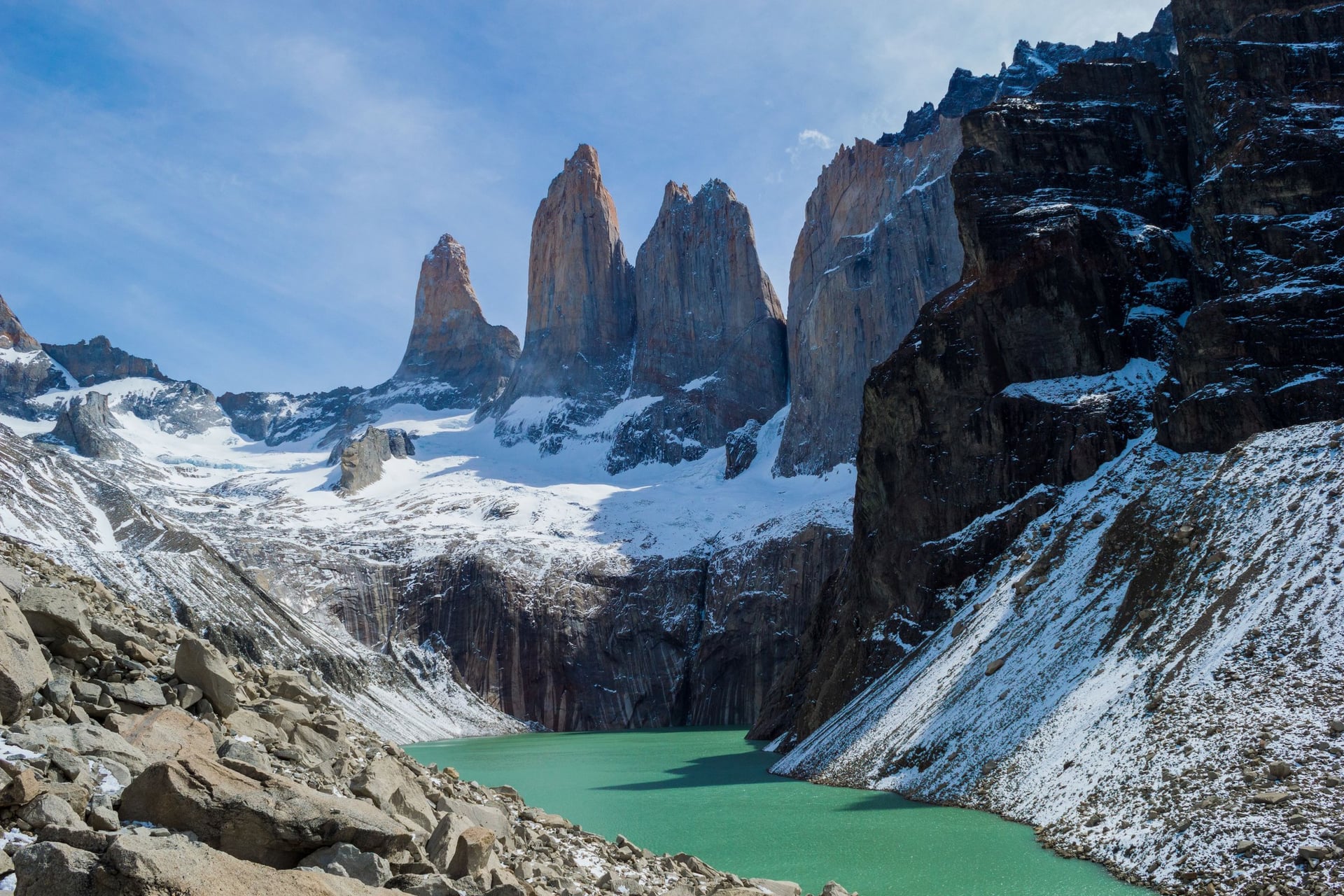
CONAF's summer season officially starts on 1 September, but snow can keep the trails under winter rules for longer. In 2026 the guide rule on the W Trek and Base Torres ran until 15 September, and from 16 September hikers could walk without a guide, with microspikes and poles required where snow remained.
Few beds are open yet, and Puerto Natales averages 12.2 °C by day and -0.5 °C at night. Across the border, Los Glaciares keeps registration compulsory on every trail until the end of September. Chile's Fiestas Patrias holidays fall on 18 and 19 September.
October: The W Trek Opens, Los Cuernos Stays Shut
Season: spring, with fresh snow still common on the summits
Sunshine: 7.7 hours a day at El Calafate
Average wind: 18.9 km/h at El Calafate
Frost and snow: 11.3 frost days and 0.9 snow days
Beds open: the Central refugio and Chileno camp from 1 October last season, Francés, Paine Grande and Grey
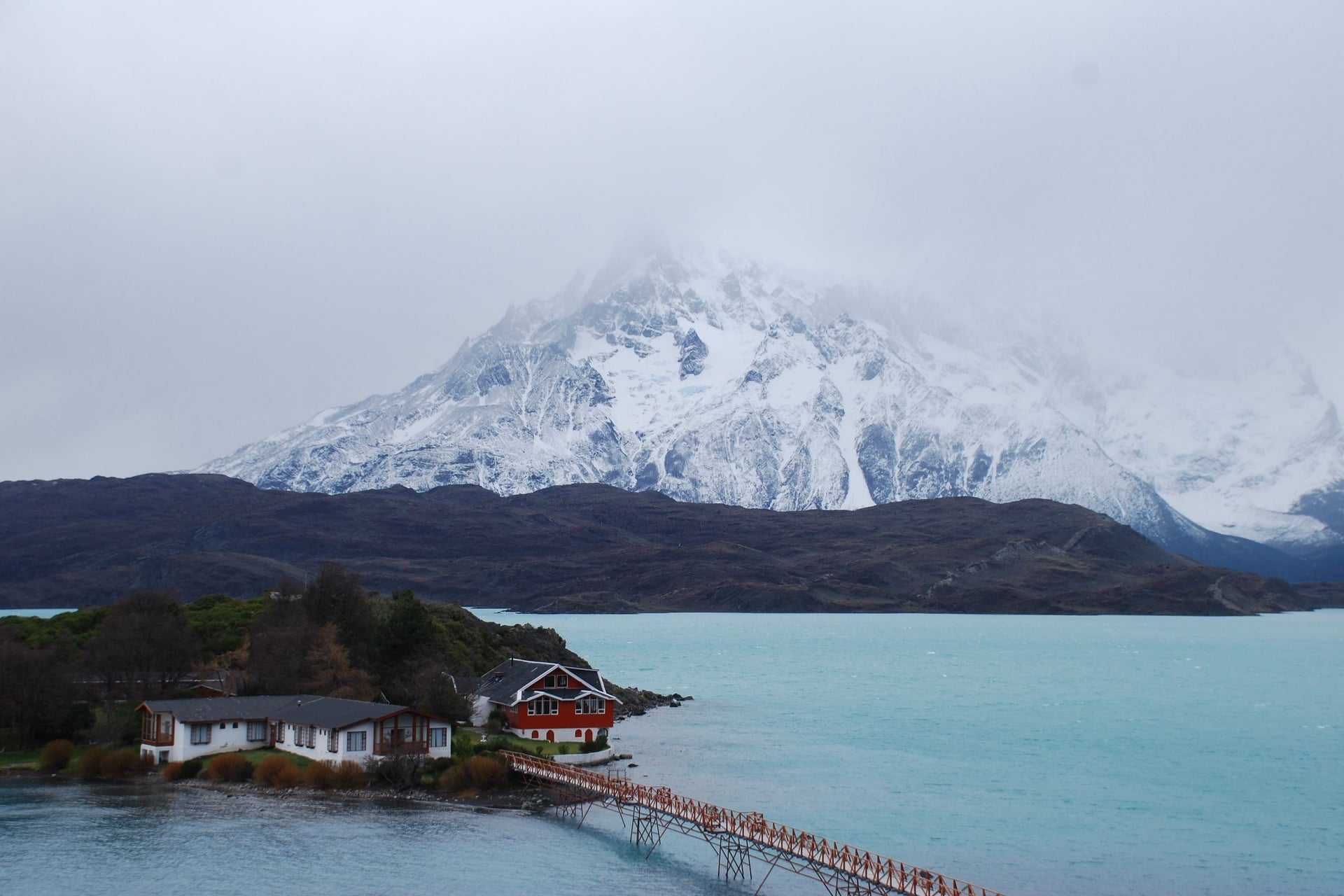
Las Torres had its Central refugio, the Chileno camp and the Francés domes open by 1 October last season, and Vertice runs Dickson and Los Perros from October to April, weather permitting. The park gates also switch to summer hours, from 07:00 to 21:00.
Los Cuernos stays shut until November, so an October W Trek sleeps at Francés instead. Daylight reaches 13½ hours, Puerto Natales averages 14 °C by day, and Las Torres charges about 13% less for a refugio bed than from November to March.
November: Every Refugio Open, Wind Near Its Peak
Season: late spring
Sunshine: 9.2 hours a day at El Calafate
Average wind: 23.9 km/h at El Calafate
Frost and snow: 4.1 frost days and 0.2 snow days
Beds open: every W Trek refugio, with Los Cuernos and the Serón camp from 1 November last season
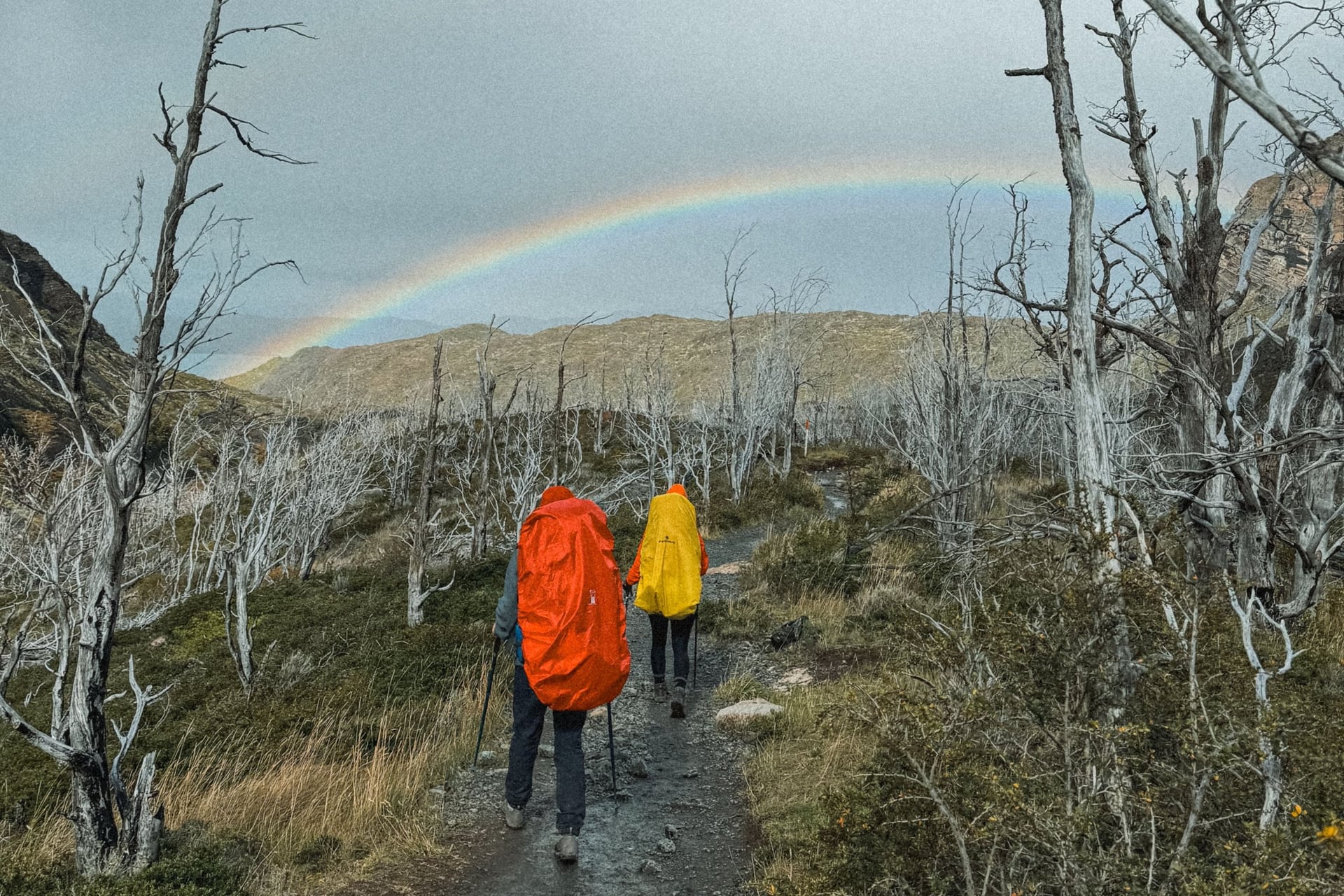
Every W Trek refugio was open from 1 November last season, and the O Circuit can reopen from 1 November if CONAF's weather and safety check allows it. Wind is close to its peak, with 20.1 strong-wind days at El Calafate, and sun, rain and gusts can all arrive in one afternoon.
The O Circuit's rules changed after five hikers died in a storm near John Gardner Pass on 17 November 2025, with winds reported at around 190 km/h. It now runs one way, for at most 100 walkers a day, and CONAF closes trails in advance when forecast wind, rain or cold cross set limits.
December: Longest Days, Most Wind
Season: summer
Sunshine: 8.8 hours a day at El Calafate
Average wind: 24.4 km/h at El Calafate, the highest of the year
Frost and snow: 1.4 frost days and 0.1 snow days
Beds open: every refugio and camp on both treks, once CONAF has opened the O Circuit
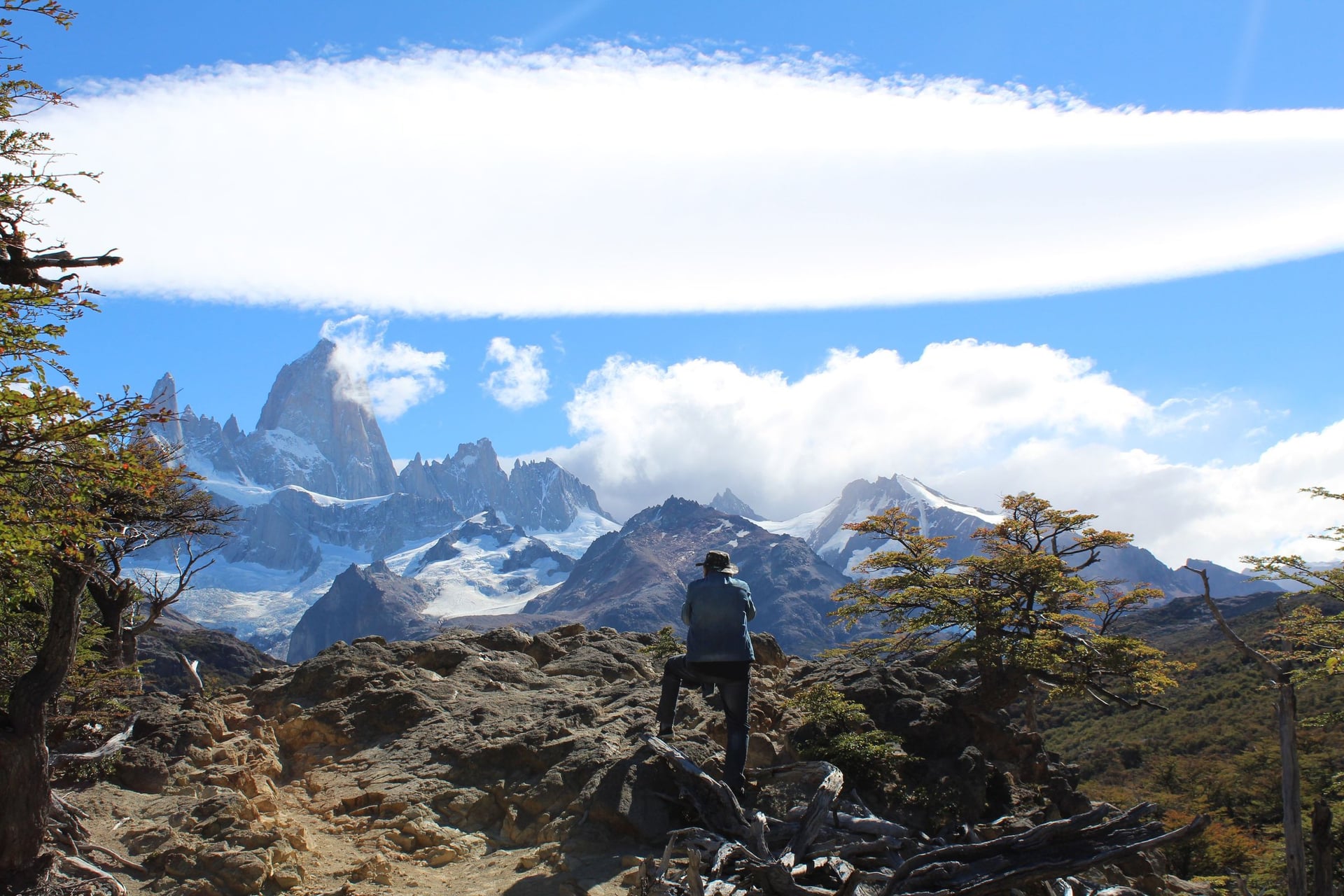
December brings 21.6 strong-wind days, more than any other month, and the strongest daily wind measured at El Calafate in a December of 2011-2020 was 107 km/h. On the Argentine side, the park service calls the last climb to Laguna de los Tres, below Fitz Roy, dangerous in wind and rain.
It is also busy. Torres del Paine had 60,181 visits in December 2024, and holiday full board at Las Torres costs about 36% more over Christmas and New Year. The longest day, 21 December, brings 16 h 32 min of daylight in the park.
January: Busiest and Warmest
Season: summer
Sunshine: 9.3 hours a day at El Calafate, the sunniest month
Average wind: 23.2 km/h at El Calafate
Frost and snow: 0.4 frost days and no snow days
Beds open: every refugio and camp on both treks
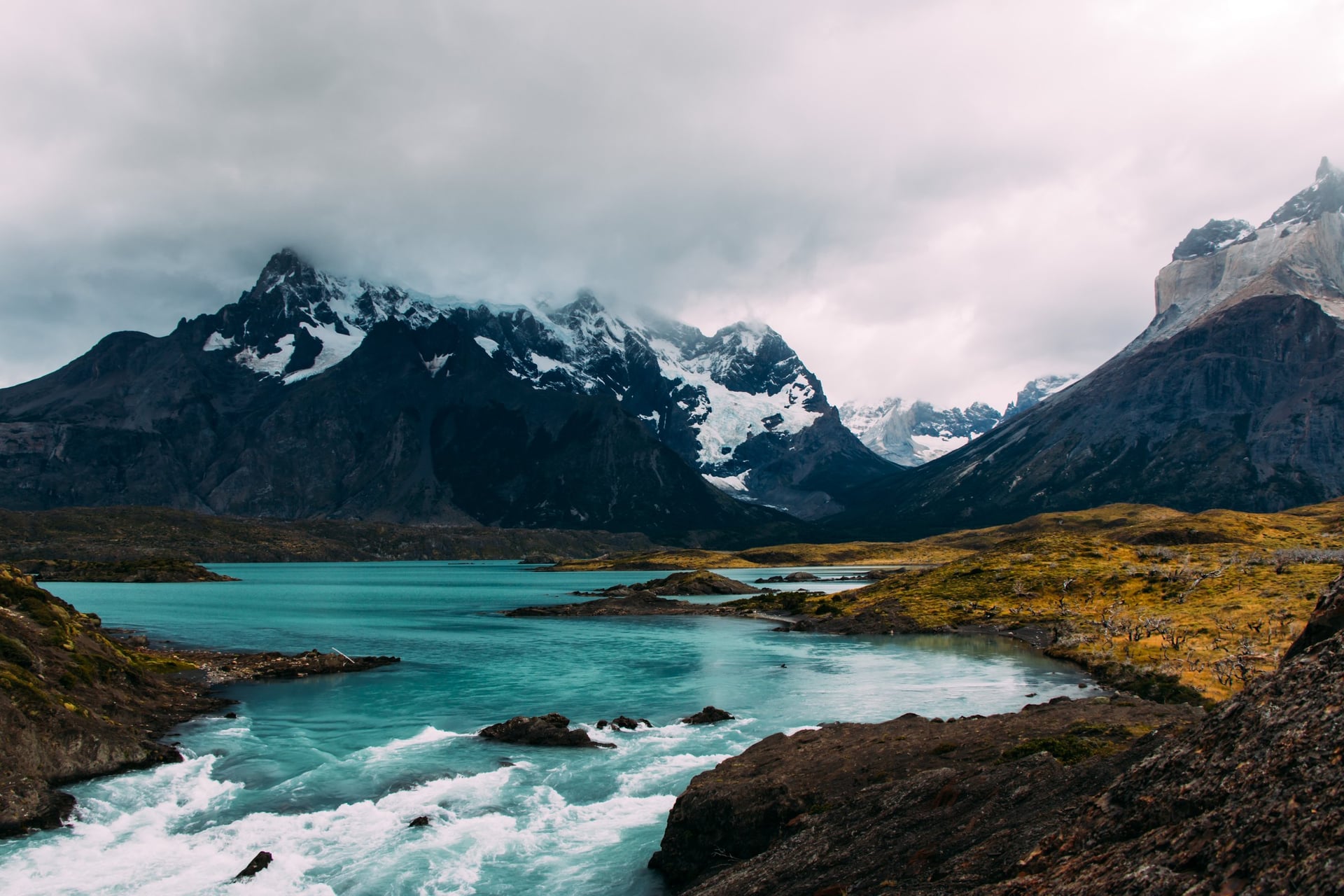
Torres del Paine had 61,027 visits in January 2024, the most of any month, and Puerto Natales averages 18.8 °C by day. With 16 hours of daylight, an early start on Base Torres beats the crowds, and even in summer a cold front can leave fresh snow on Paine Grande.
The O Circuit's 2026 self-guided season opened on 1 January under CONAF's new safety protocol. Book flights early: Puerto Natales airport opens only from Friday to Sunday in January 2027 because of runway works, so most hikers fly into Punta Arenas and take the bus north, about 3 h 15 min.
February: Long Days, Less Wind
Season: late summer
Sunshine: 8.6 hours a day at El Calafate
Average wind: 20.6 km/h at El Calafate
Frost and snow: 0.7 frost days and no snow days
Beds open: every refugio and camp, from Los Cuernos on the W Trek to Dickson and Los Perros on the O Circuit
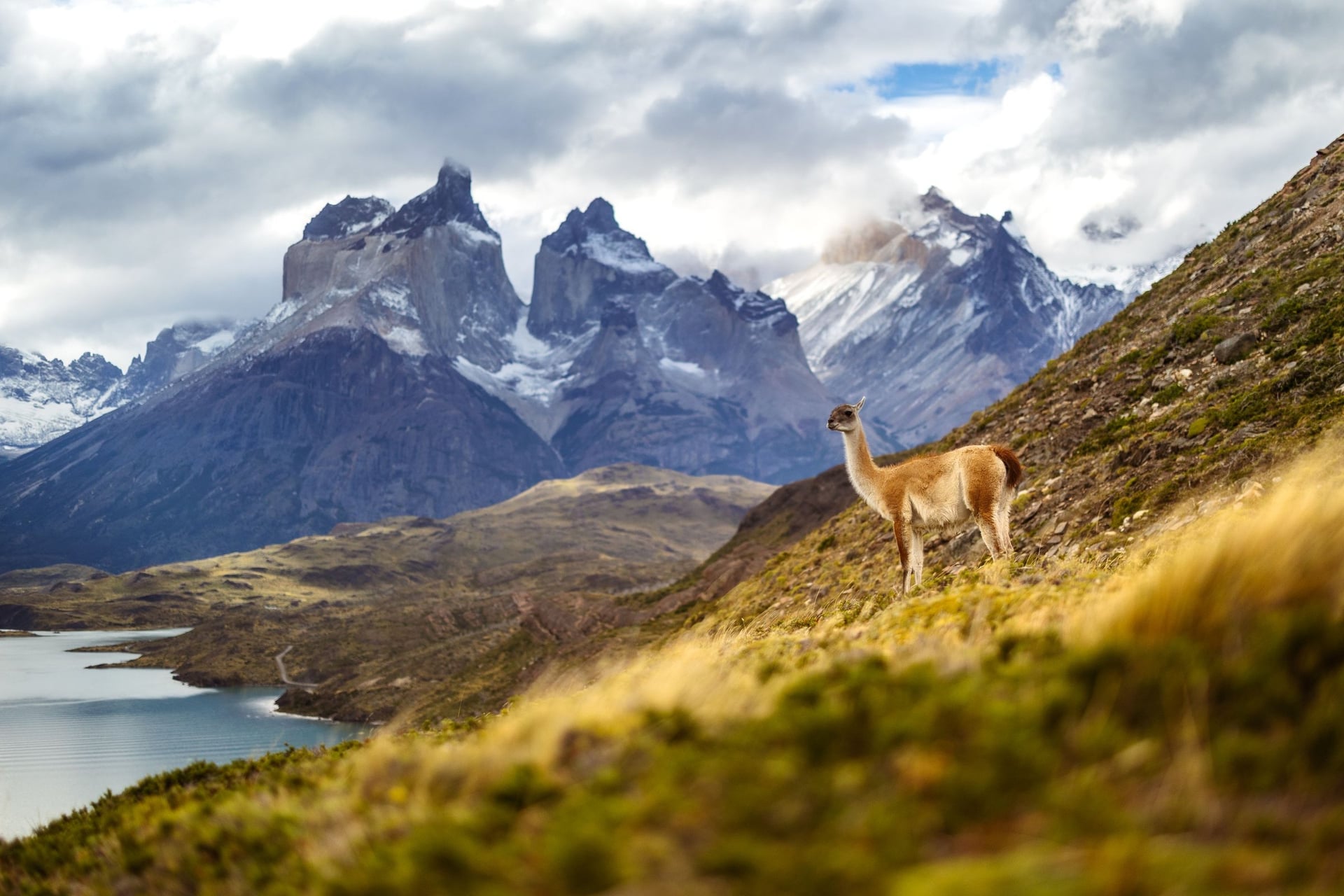
Wind eases sharply after January: El Calafate's strong-wind days fall from 20.1 to 14.3, while daylight still runs past 14 hours. Puerto Natales averages 18.1 °C by day and 4.2 °C at night, almost as warm as January.
February is a strong month for the O Circuit, with Dickson and Los Perros, the camps on its back side, open, and in 2026 the circuit stayed in its self-guided season until 26 March. In Argentina, Carnival falls on 8 and 9 February 2027, a long weekend for Argentine travellers.
March: Calmer Days as the O Circuit Closes
Season: early autumn
Sunshine: 6.9 hours a day at El Calafate
Average wind: 18.1 km/h at El Calafate
Frost and snow: 3.3 frost days and no snow days
Beds open: every refugio until Los Cuernos and the Serón camp closed on 30 March last season
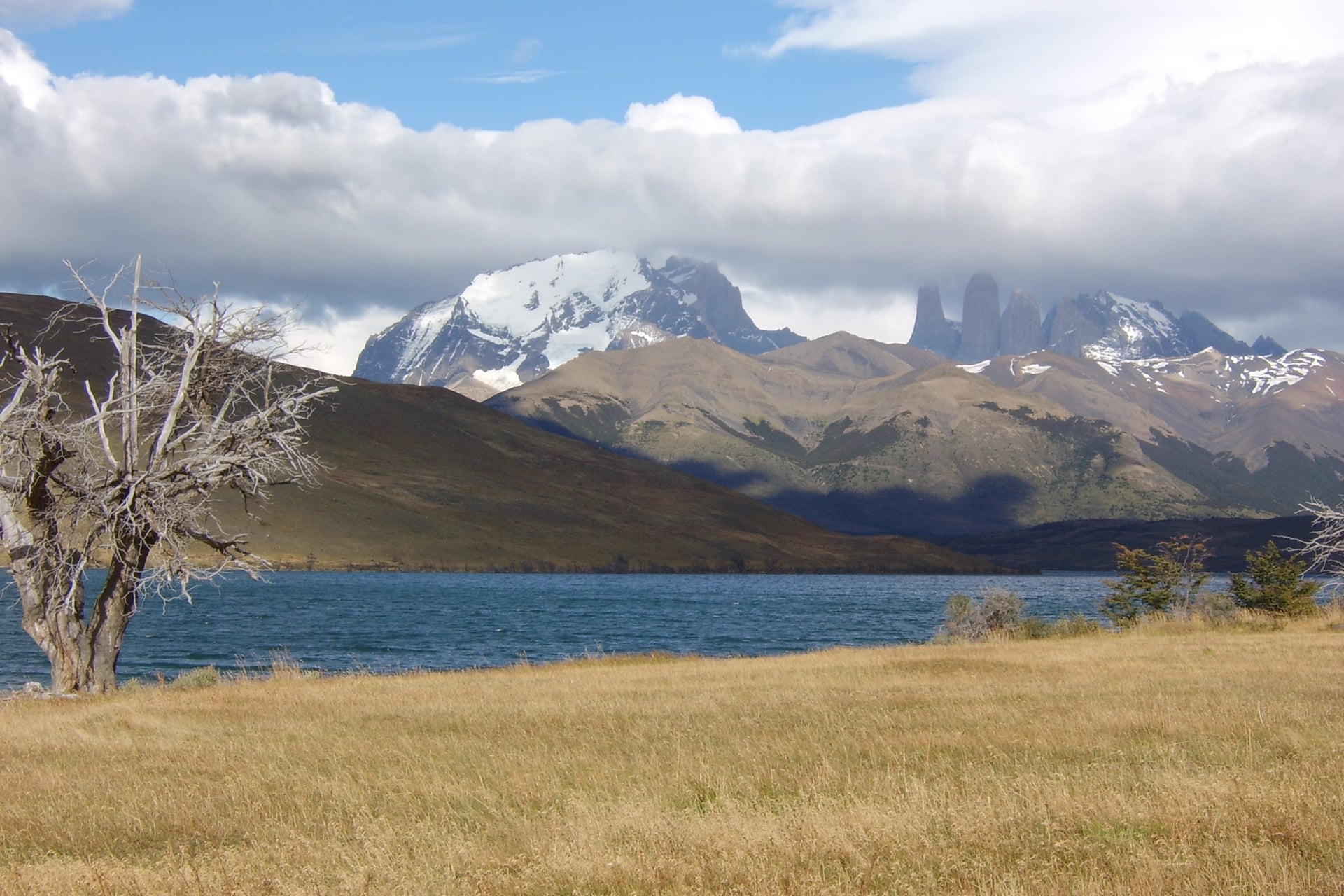
Puerto Natales still averages 18.1 °C by day in March, the same as February, and El Calafate's strong-wind days are a third below December's. Daylight falls to 12½ hours by mid-month, and the steppe grass around Laguna Azul and Laguna Amarga has turned gold.
The season starts to close. Plan an O Circuit for the first half of March: in 2026 CONAF ended its summer season early on 26 March because of compacted snow and ice. Easter Sunday falls on 28 March 2027, a holiday weekend in both countries.
April: Autumn Colour, Fewer Beds
Season: autumn
Sunshine: 5.7 hours a day at El Calafate
Average wind: 15.6 km/h at El Calafate
Frost and snow: 11.8 frost days and 0.4 snow days
Beds open: Central and Chileno to 25 April and Francés to 27 April last season, plus Paine Grande and Grey
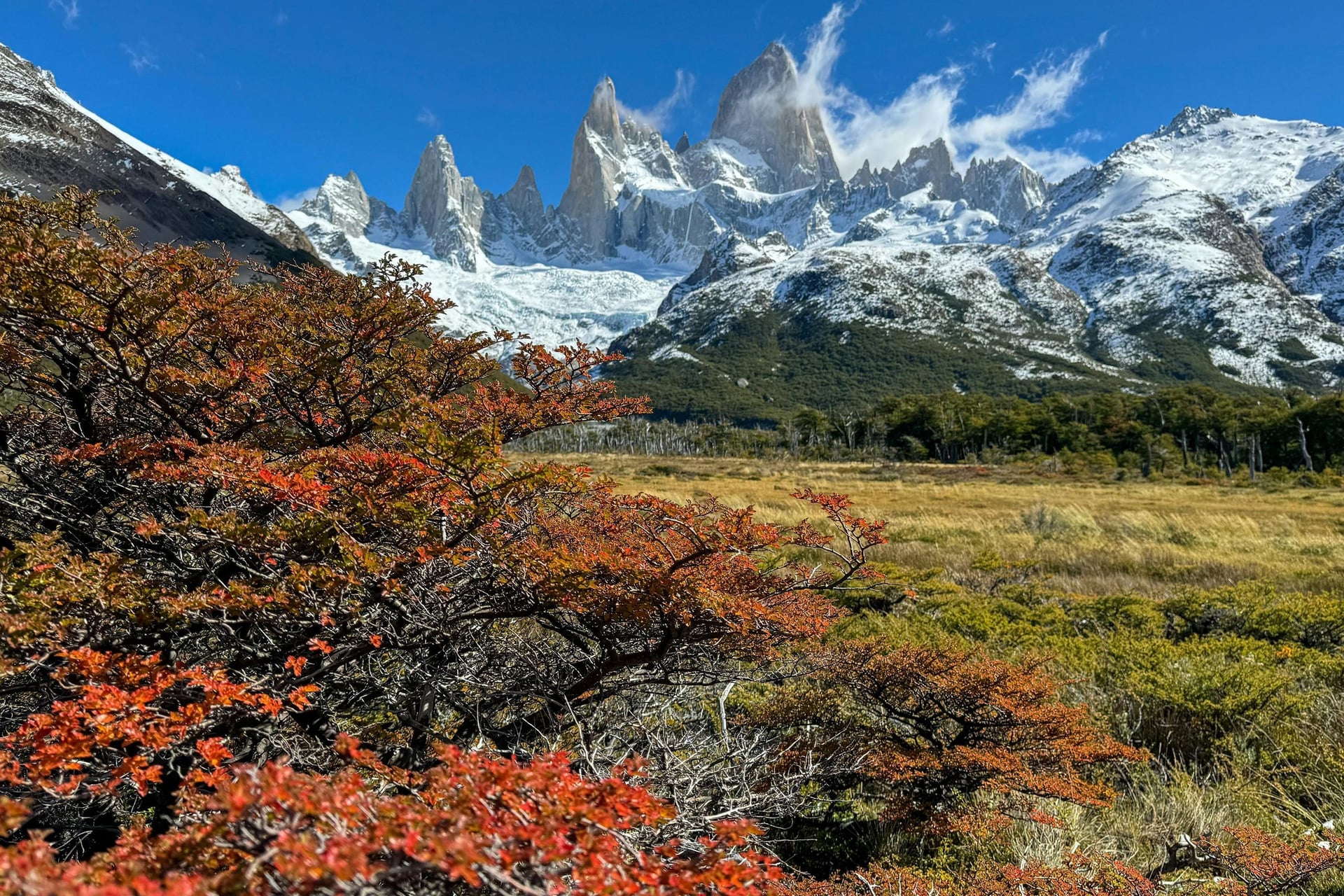
Argentina's park service describes Los Glaciares in autumn as yellows, ochres and reds, and hikers report the colour peaking around the turn of March into April in El Chaltén's beech woods. The week moves from year to year.
April is also when services close. In 2026 CONAF brought its winter rules forward to 27 April, and days shorten to 10½ hours. Puerto Natales averages 14.3 °C by day and -0.3 °C at night, and El Calafate counts 11.8 frost days, so expect ice on the morning trail.
May: Fewest Windy Days, Guides Only
Season: early winter
Sunshine: 3.8 hours a day at El Calafate
Average wind: 11.8 km/h at El Calafate, less than half of December's
Frost and snow: 20.5 frost days and 1.8 snow days
Beds open: Paine Grande and Grey, the two refugios listed as open all year
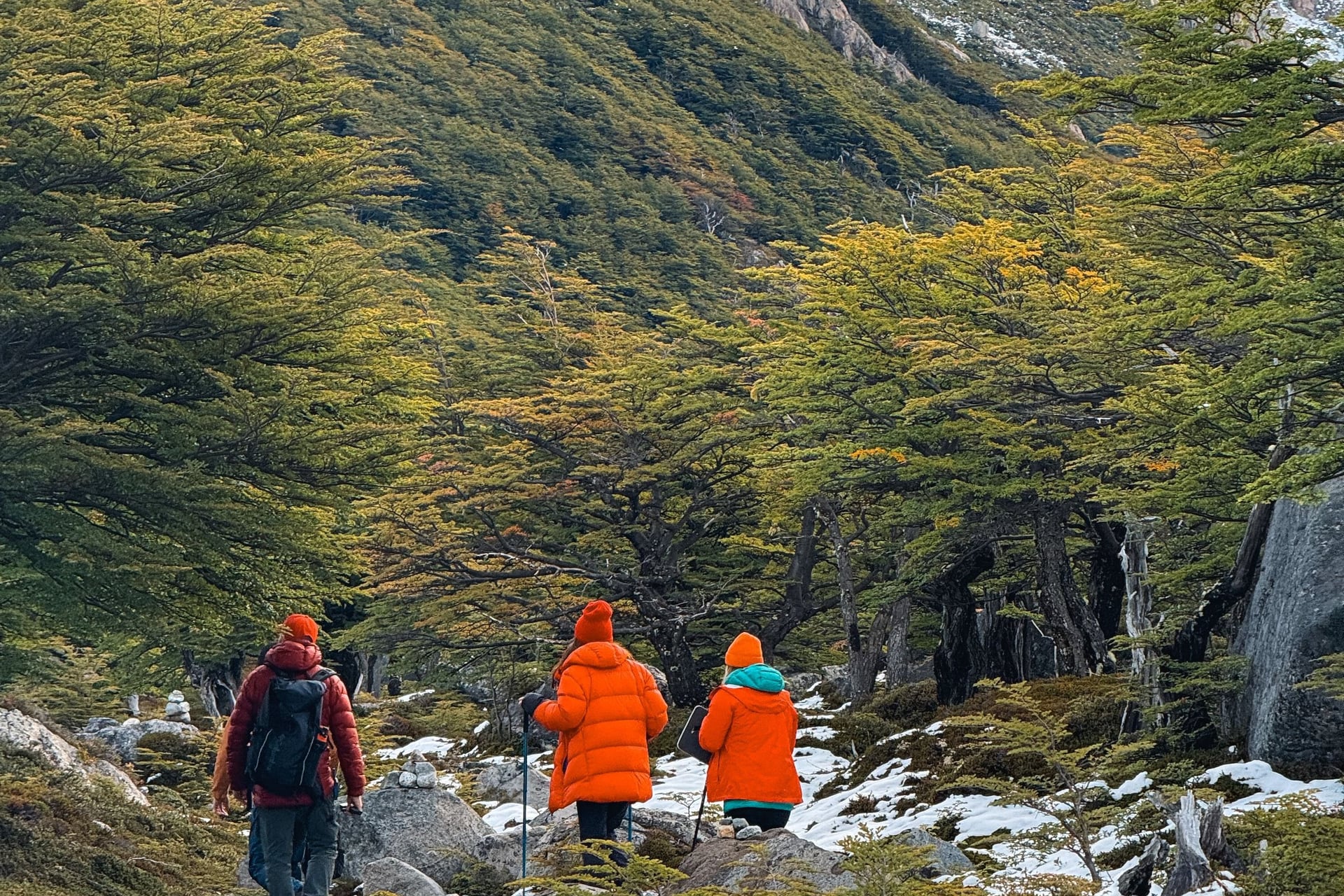
Winter rules start in May. From 1 May to the end of August CONAF requires an accredited guide on the W Trek and Base Torres, and in 2026 the O Circuit closed for the winter. El Calafate records only 6.3 strong-wind days, the fewest of any month.
On the Argentine side, the trails below Fitz Roy stay open, but registration at the park's visitor centre becomes compulsory from May to September, and the park's winter notices require crampons and poles. Daylight drops to 8 h 55 min, and Puerto Natales averages 10.9 °C by day and -2.9 °C at night.
June and July: The W Trek Closed in 2026
Season: midwinter
Sunshine: 3.1 and 3.5 hours a day at El Calafate
Average wind: 12.9 and 11.7 km/h at El Calafate
Frost and snow: 25.6 and 27.3 frost days, 5.6 and 5.9 snow days
Beds open: Paine Grande and Grey are listed as open all year, but the W Trek closed in 2026
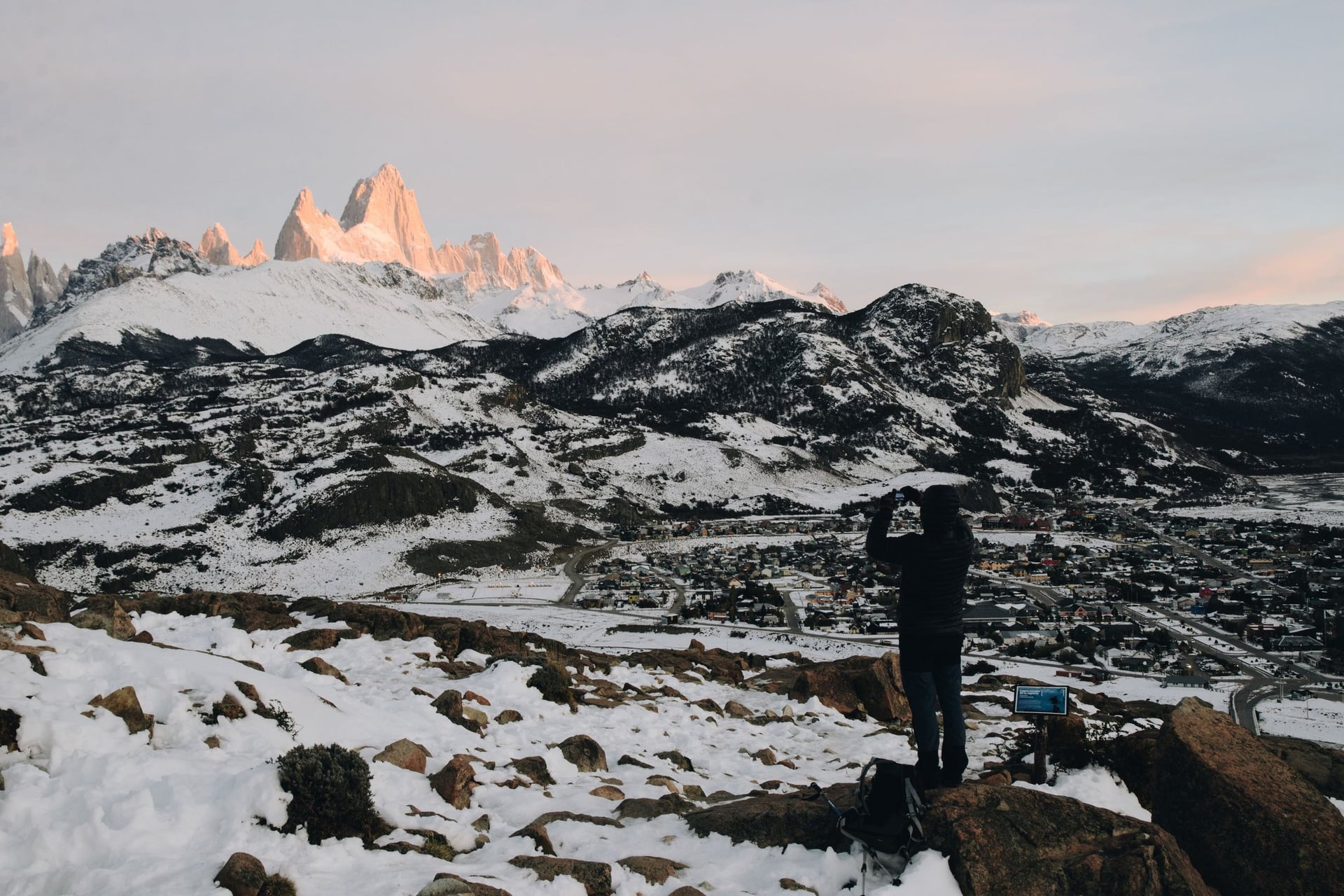
In June and July 2026 CONAF closed the W Trek outright because the concessionaire paused its services, and it stopped hiker crossings on the Pehoé and Grey boats. Only Base Torres stayed open, with an accredited guide. In other winters the W Trek stays open to walkers with a guide.
These are the coldest and darkest months. Puerto Natales averages -4.0 °C at night in both, and the shortest day, 21 June, lasts 7 h 55 min in the park. El Chaltén's trails stay walkable with crampons, poles and registration, though heavy snow closes some of them.
August: Guided Walking, Longer Days
Season: late winter
Sunshine: 4.8 hours a day at El Calafate
Average wind: 13.6 km/h at El Calafate
Frost and snow: 25.5 frost days and 4.4 snow days
Beds open: Paine Grande and Grey, reached only with a guide in 2026
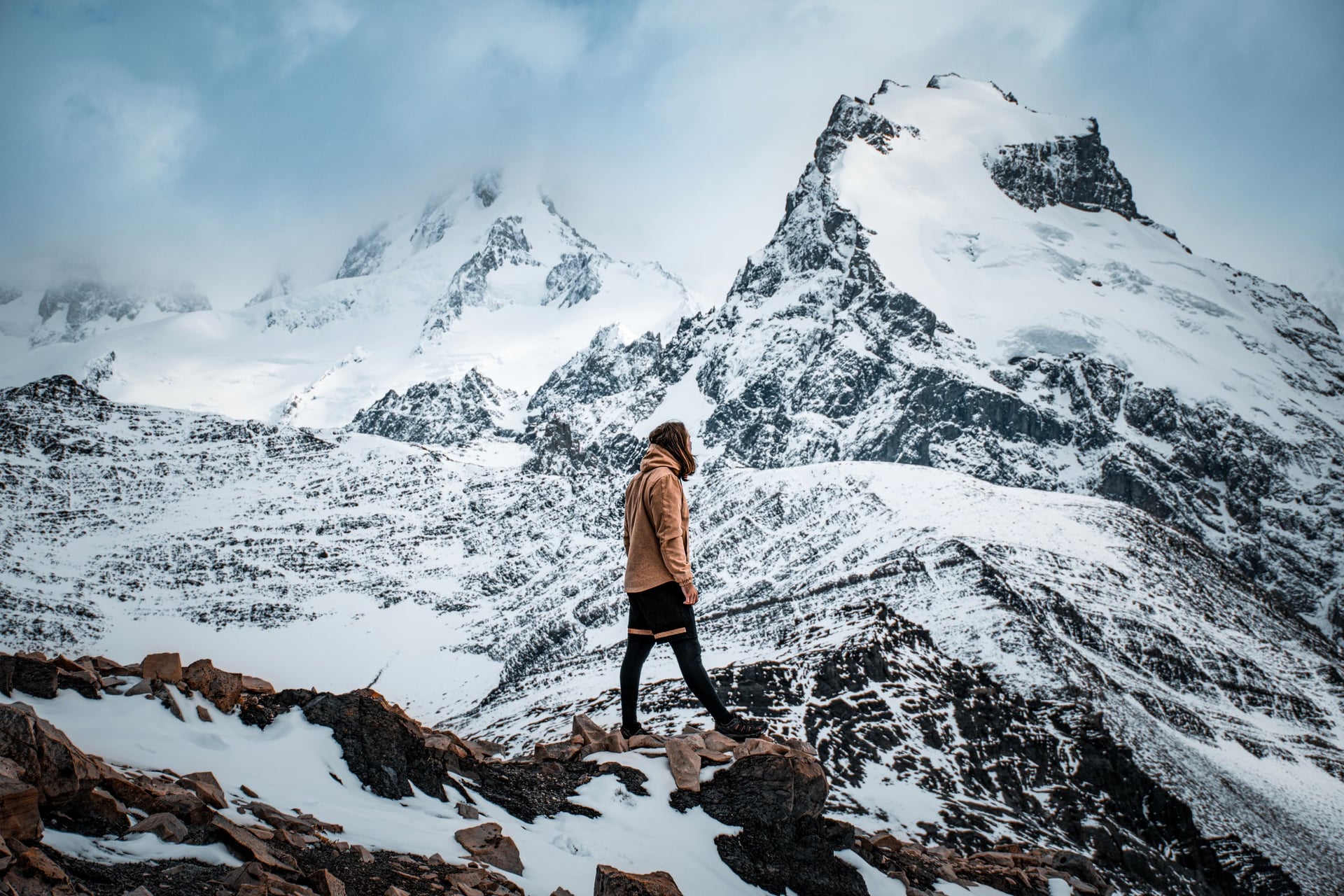
From 1 August 2026 CONAF dropped the special permit for the W Trek, but walkers heading for Paine Grande and Grey still needed a guide and had to register at its checkpoints. The winter rules officially end on 30 August, and CONAF's summer season starts on 1 September.
Daylight grows quickly, from 8 h 18 min in mid-July to 9 h 45 min by 15 August. El Calafate's strong-wind days climb back to 9.7, and Puerto Natales averages 8.9 °C by day and -3.3 °C at night. On the Argentine side, El Chaltén's trails still require registration until the end of September.
Chile or Argentina: How the Seasons Differ
Torres del Paine and El Chaltén lie about 180 km apart under the same westerly wind, but they run on different calendars.
Torres del Paine, Chile | El Chaltén, Argentina | |
Where you sleep | Refugios and campsites run by Las Torres and Vertice | Village beds, or the Poincenot, De Agostini and Capri camps |
How you pick your days | Fixed dates, with every night booked before you enter | Wait in the village for a calm, clear day |
Official season | Summer season from 1 September; winter rules from May to August | September to April, as the park service advises |
In winter | A guide on the W Trek and Base Torres; O Circuit closed | Registration on every trail; crampons and poles |
The difference is in the planning. CONAF lets overnight walkers into Torres del Paine's mountain area only with every night booked, and rangers check tickets at Laguna Amarga. You walk in whatever weather your dates bring, from calm sun to a day of rain.
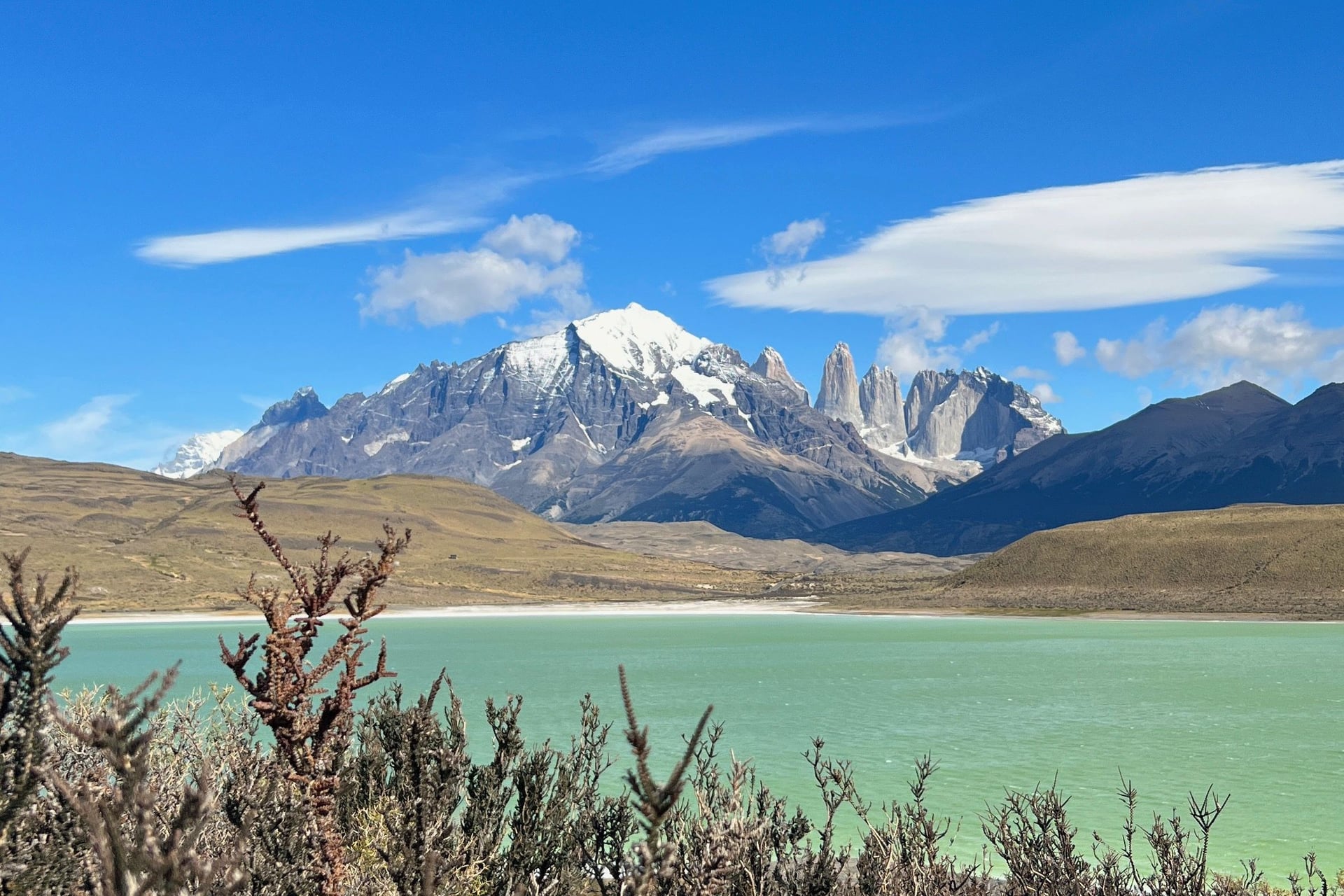
El Chaltén's day hikes start in the village and need no bed on the trail, so you can wait for the calm, clear day the forecast shows. Its campsites at Poincenot, De Agostini and Capri must now be booked and paid in advance.
Rain differs too. El Calafate, on the dry steppe, gets little rain: 161 mm a year in the SMN records. CONAF puts the steppe inside Torres del Paine at up to 400 mm, and the mountains on both sides get far more.
Before You Book Your Dates
Book the beds before the flights. Refugio bookings for a season usually open between April and June, and the summer months fill first, so book a December or January trip as soon as they open.
Las Torres keeps the full price of a stay cancelled 44 days or less before arrival and allows no date changes once you have paid. In the last weeks before you travel, check CONAF's park page: its notices overrule any plan made months ahead, from trail closures to the winter guide rule.
Our self-guided Patagonia W Trek Tour books that chain of refugio nights for you:
Duration: 7 days / 6 nights, Puerto Natales round trip
Walking: four days of 11 to 24 km, to the towers, Los Cuernos, the French Valley and Grey
Nights: Refugio Torre Central, Refugio Los Cuernos, Refugio Paine Grande and Camp Grey, plus two hotel nights in Puerto Natales
Included: the park entrance fee, transport, the one-way boat on Lago Grey, four dinners, a GPS app and a digital guidebook
For the full loop, our Torres del Paine O Circuit tour runs 10 days from Punta Arenas. When your dates are set, send us your dates and we will check the refugios for you.
On 25 November the sun rises over Torres del Paine at about 05:40 and sets after 21:30, long enough to reach the towers at dawn and still walk back to the refugio in daylight.
Frequently Asked Questions
Plan with a hiking expert
Free advice from a team that knows these routes inside out - real people, not a bot

HASSLE-FREE
We handle itineraries, accommodations, and anything else you prefer not to deal with, so you can enjoy a carefree hike.

BOOK WITH CONFIDENCE
We are a financially protected company, fully bonded and insured, keeping your money safe and allowing you to travel with confidence.

TRIED & TESTED ADVENTURES
Only the best hut to hut hikes in the world, cherry-picked by our local team with an in-depth knowledge.

UNBEATABLE SUPPORT
Our 24/7 customer support is where we show our passion, bringing you a better experience by making your well-being our number one priority.