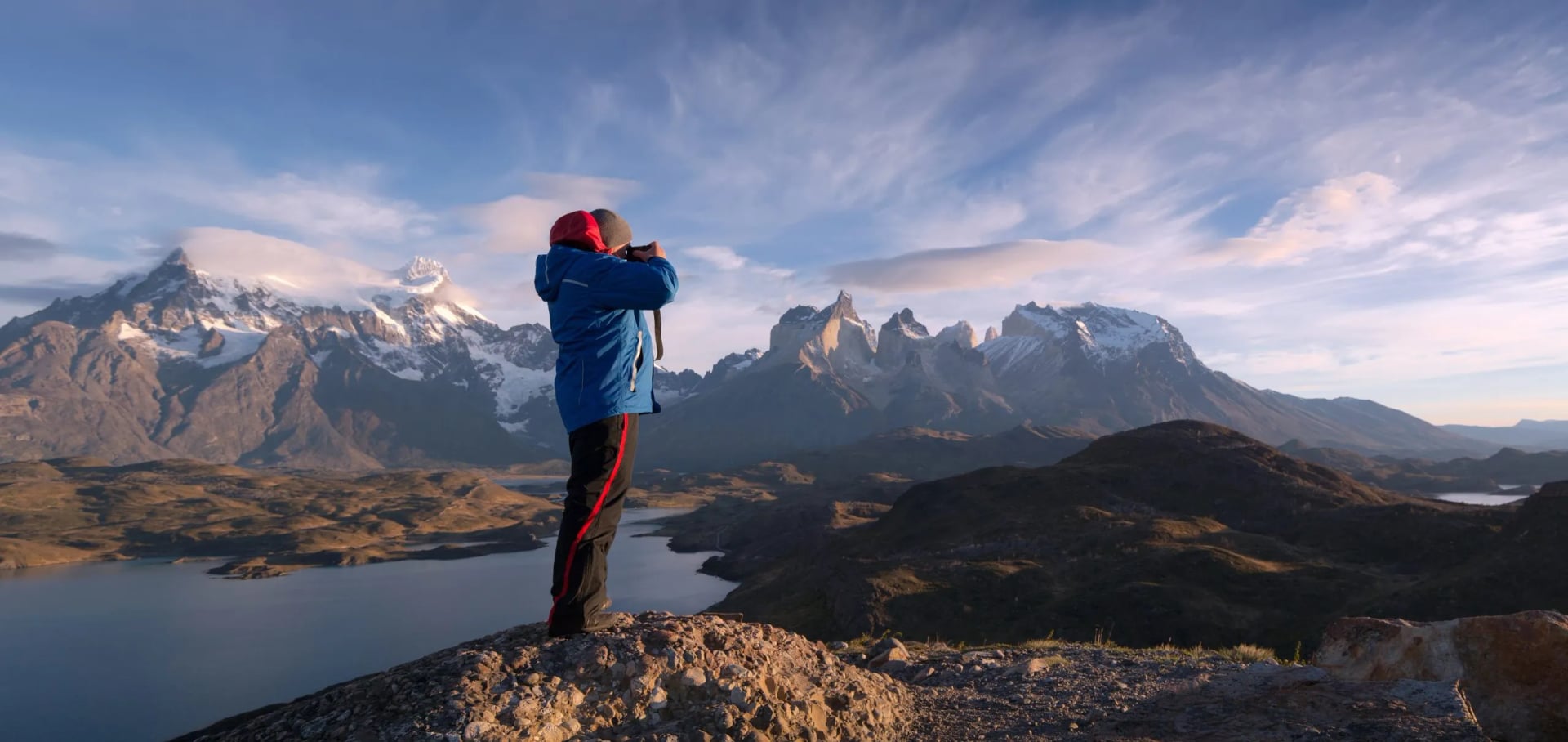
O Circuit Torres del Paine: The Ultimate Guide
The O is the full lap of the Paine massif, and the park now lets only 100 walkers a day onto it.
Quick links
Don't want to read all this?
We've planned 2,000+ hiking trips. Send your dates, fitness and group size — we'll map the route and book every night.
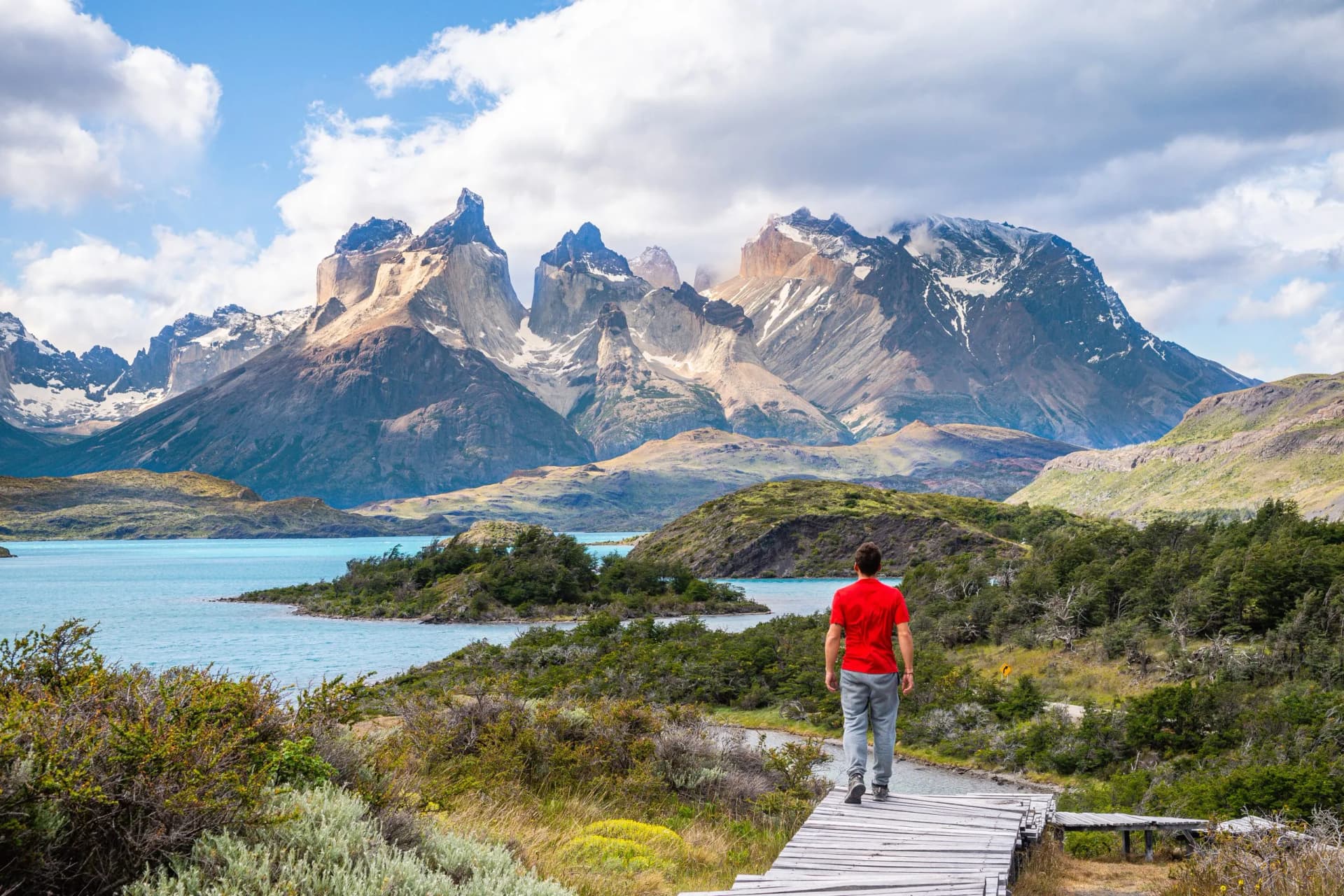
The O circuit goes right round the Paine massif in Torres del Paine, Chilean Patagonia. Its southern half is the W trek. Only O walkers see the northern half: three days behind the massif with no road and no phone signal.
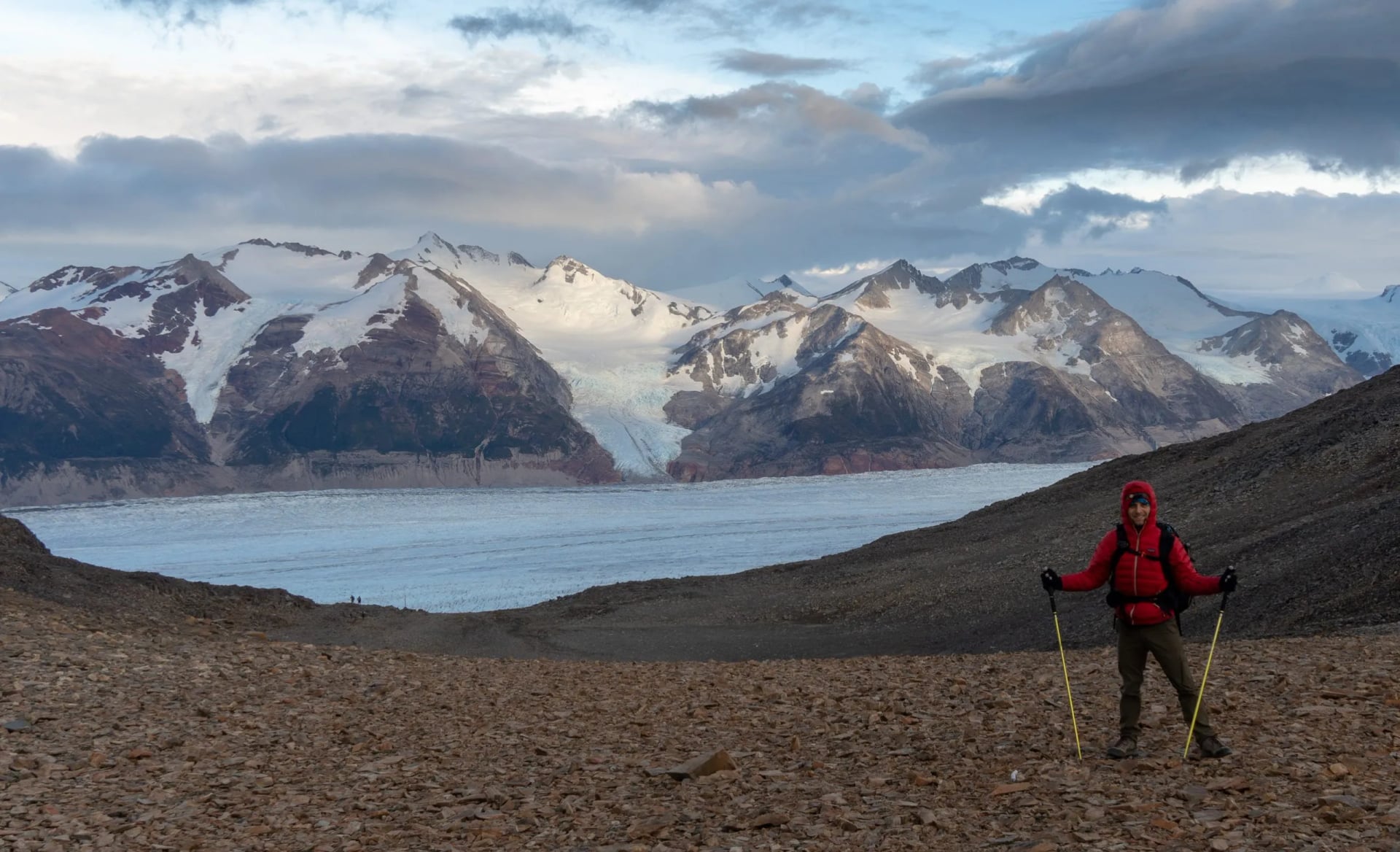
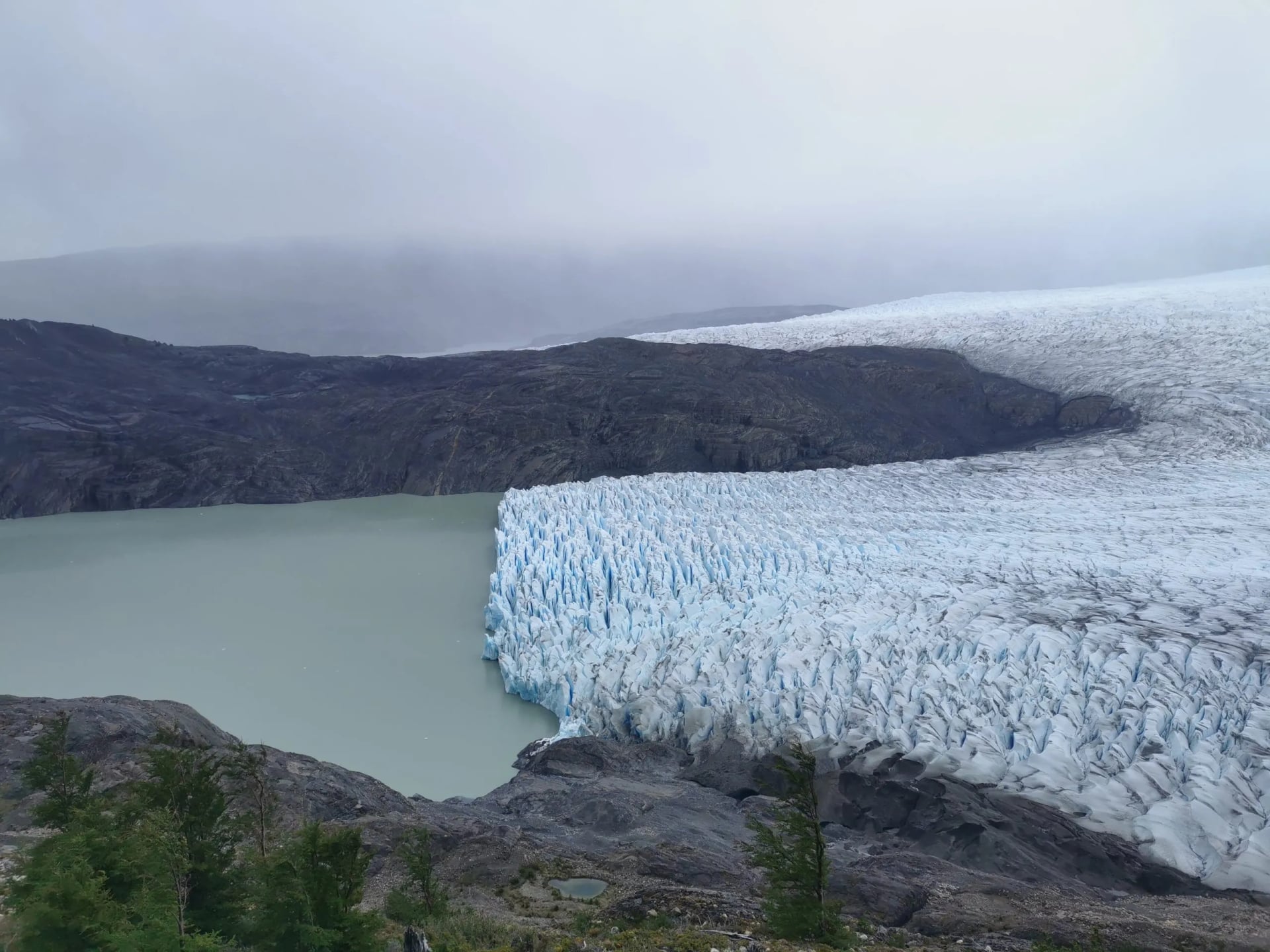
Everyone walks it counter-clockwise, so the quiet days come first. On the third walking day you cross John Gardner Pass and look down on Grey Glacier, the park's largest. You finish with the climb to the three granite towers.
The loop is 135 km with about 5,700 m of climbing over seven walking days, nearly twice the W's four. Since a storm killed five walkers on their way to the pass in November 2025, CONAF caps it at 100 walkers a day, so the northern camps sell out first.
O Circuit in Numbers
The O is a test of stamina, not of climbing skill: in season boots and poles are all you need, even on John Gardner Pass.
Length: 135 km (84 miles), summed from our published stages
Elevation gain: about 5,700 m (18,700 ft), with nearly as much again in descent
Duration: 8 to 10 days, of which 7 are walking days
High point: John Gardner Pass, roughly 1,200 m (3,900 ft)
Best time: November to March
Difficulty: strenuous, 4 of 5 for fitness and 3 of 5 for technical ground
Start and finish: Torres Central, walked counter-clockwise
Daily limit: 100 walkers on the circuit
These come from the park's own guidance and from the published stages of our itinerary. The figure to act on first is the daily limit, because a capped circuit sells out long before an uncapped one.
What the O Circuit Actually Is
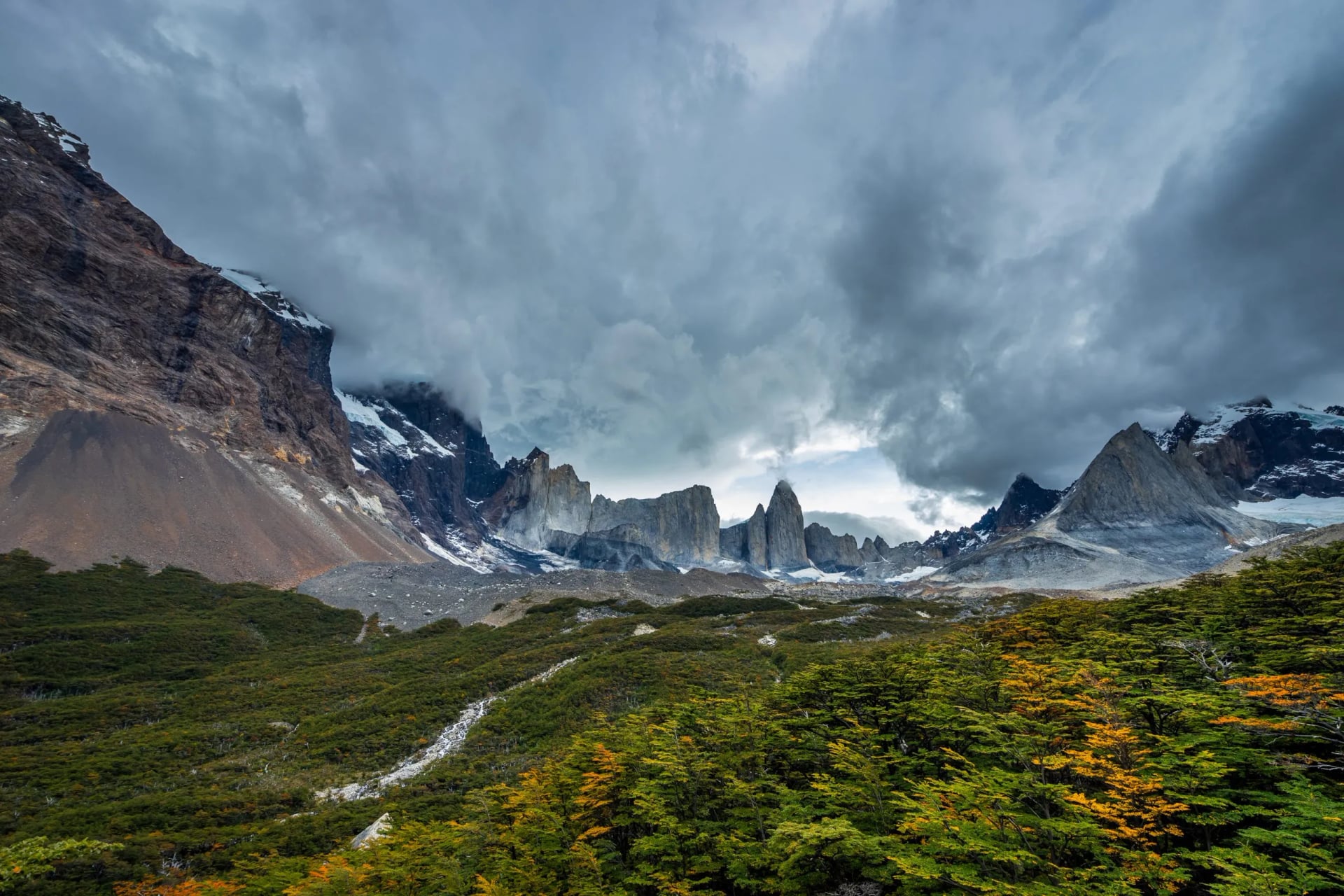
The route is a single closed loop, starting and finishing in the Torres sector on the park's eastern side. Its southern arm covers the same ground as the W trek, taking in the towers viewpoint, the French Valley and the shore of Lake Nordenskjold. Its northern arm is the part only O walkers see.
The official name is worth knowing because signage, ranger stations and the park's own paperwork all use it. Park signs say Macizo Paine circuit, never "the O". A walker hunting for a letter on a signpost will not find one.
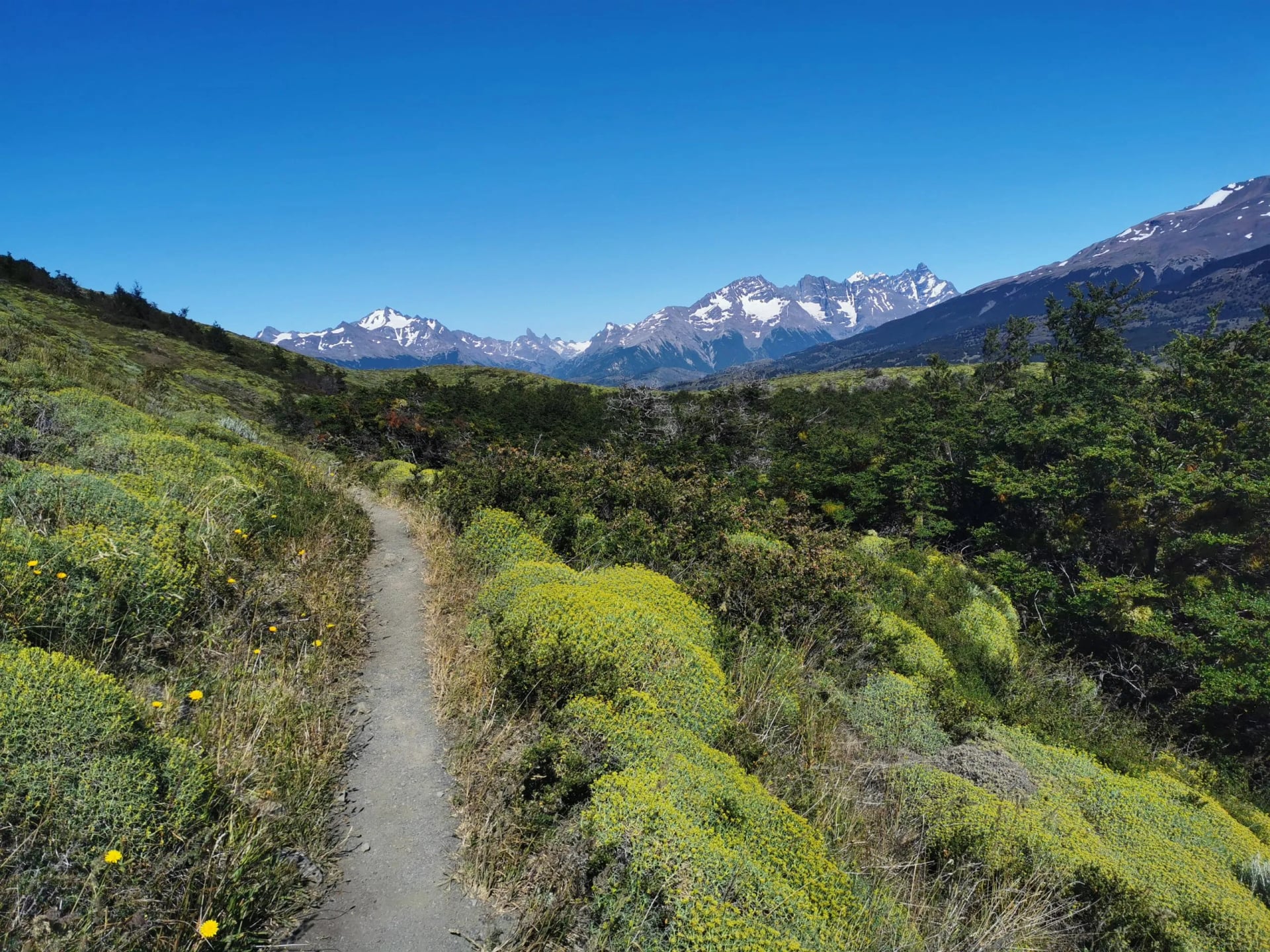
Direction is not a matter of preference. Since the circuit reopened after the November 2025 storm, CONAF has run it as one-way traffic, counter-clockwise. The loop now runs one way only.
You therefore walk the northern half first and finish on the W's ground. The logic is partly terrain and partly crowd control: from the Perros side the high pass climbs at a kinder gradient, and one flow of walkers on a narrow pass beats two.
That ordering has a consequence few people plan around. The quiet days come at the start and the busy ones at the end, so the circuit fills with day walkers as your legs empty out.
How Long the O Circuit Takes
The park's own answer is eight to ten days. For comparison it puts the W at three to five. Allow at least eight days for the full loop.
Our own version runs to ten days from Punta Arenas back to Punta Arenas, of which seven are walking days. Ten days is the top of the park's own recommended range. The extra time is not spent on the trail: it buys a night in Punta Arenas at each end, plus a transfer day into the park through Puerto Natales.
Eight-day park itineraries begin and end at the park gate, and they split the long opening stretch into two short days at Serón. An eight-day park itinerary and our ten-day trip are the same walking.
Our ten-day itinerary publishes the distance and the climb for every stage, and those figures matter more than the number of days.
How Hard Each Day Is
Here are the published figures from our itinerary, which are what we plan the trek around:
Torres Central to Camp Dickson: 35 km, 940 m up, 890 m down
Dickson to Los Perros: 15 km, 730 m up, 160 m down
Los Perros to Camp Grey, over John Gardner Pass: 15 km, 670 m up, 1,400 m down
Grey to Paine Grande on Lake Pehoé: 15 km, 440 m up, 450 m down
Paine Grande to Refugio Los Cuernos, via the French Valley: 20 km, 1,060 m up, 930 m down
Los Cuernos to Torres Central: 15 km, 730 m up, 760 m down
The towers viewpoint and back: 20 km, 1,130 m up, 1,130 m down
That comes to 135 km with about 5,700 m of ascent and a near-identical amount of descent. The descent total is the figure that catches people out, because it is knees rather than lungs that end most O treks early.
Two days stand out for different reasons. The opening 35 km is the longest single stretch on the circuit and it lands on your first day of walking, when the pack is heaviest and you have no read yet on what the weather does here.
The pass day looks modest at 15 km until you notice the 1,400 m of descent packed into its second half. Meanwhile the two biggest climbs, at 1,060 m and 1,130 m, both sit on the southern arm at the very end. The hardest ascents come last, not on the pass.
The Back Side and John Gardner Pass
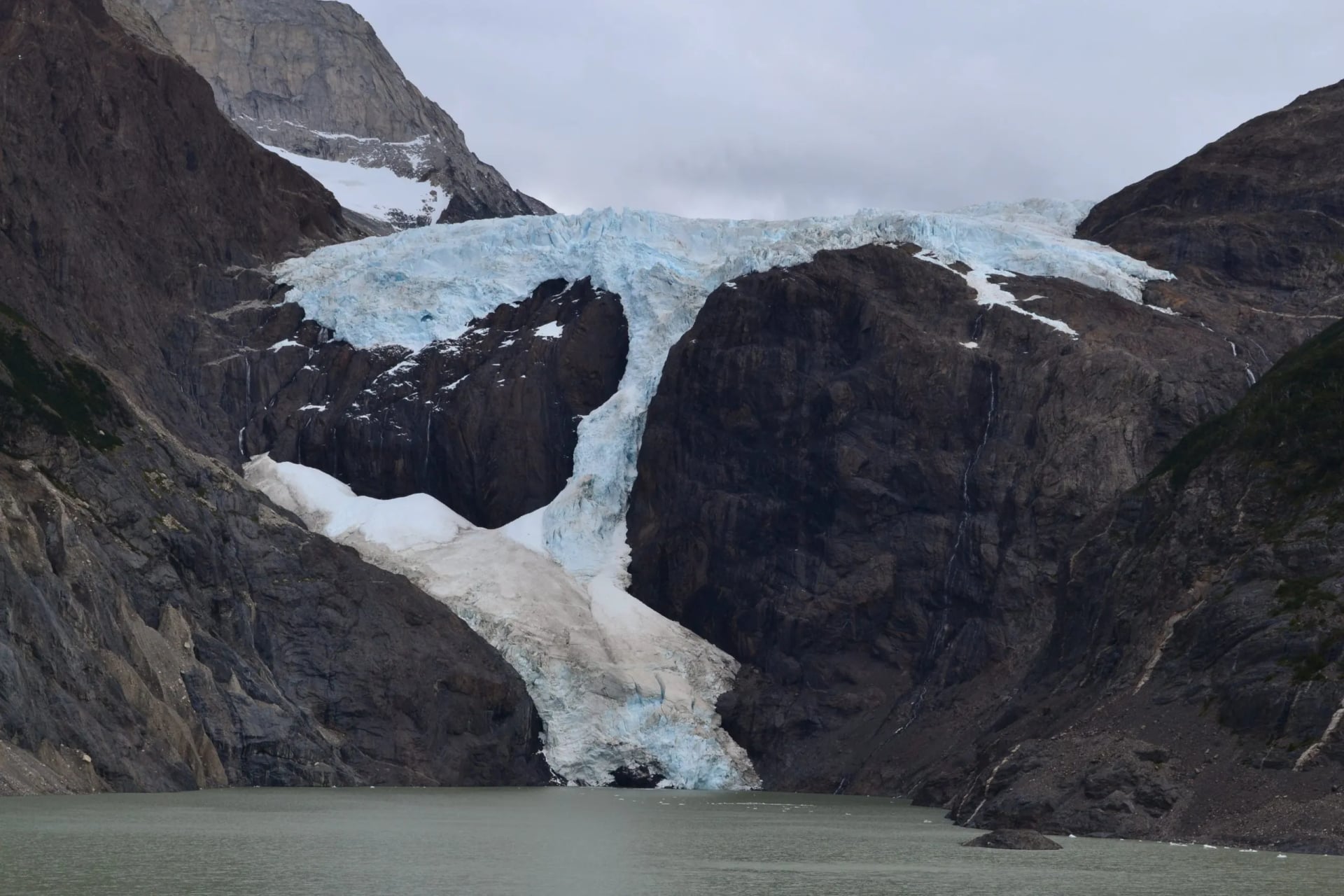
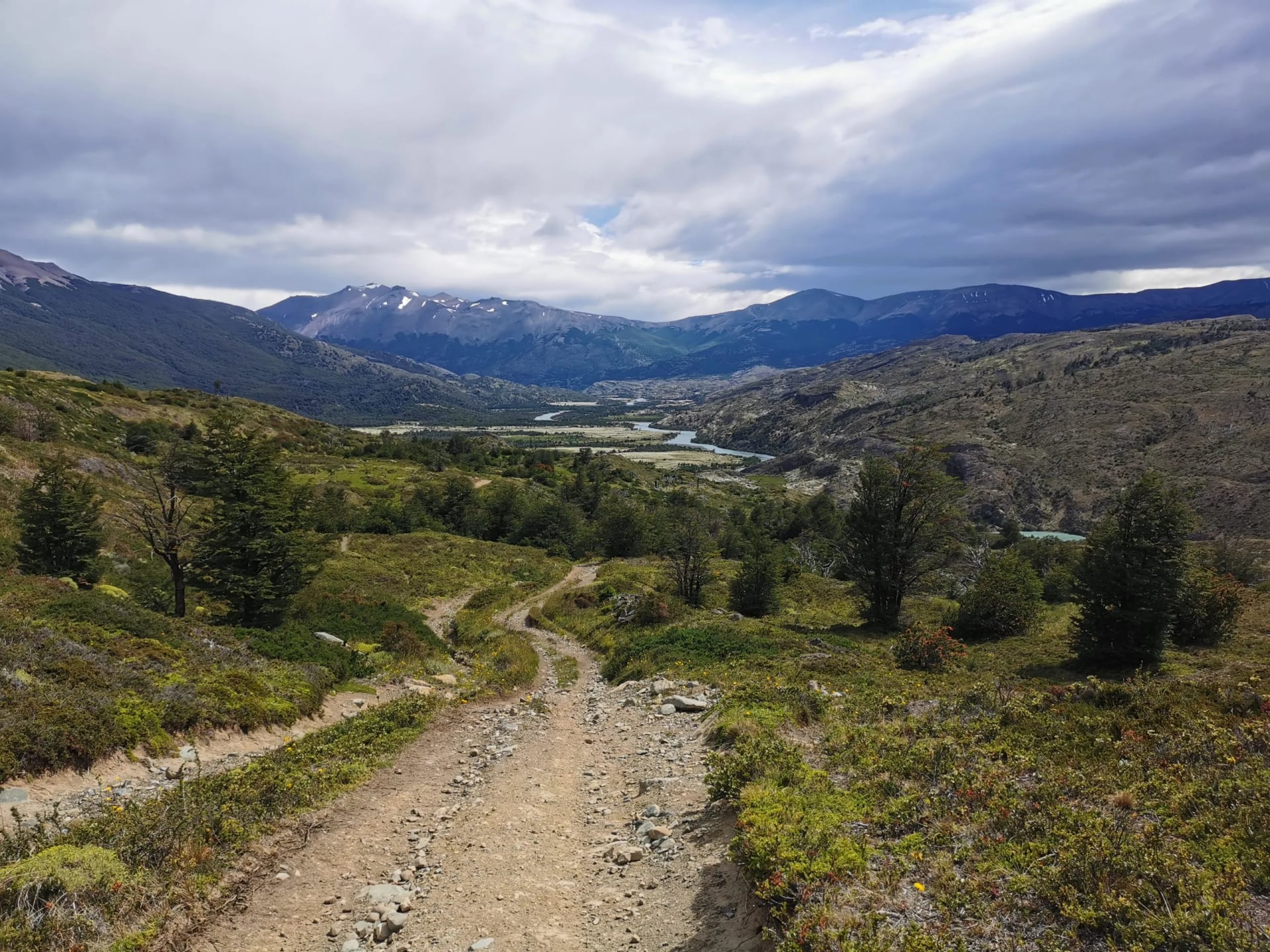
On the back side the trail passes Lake Dickson and the hanging Perros Glacier, with far fewer walkers than on the W.
John Gardner Pass, at roughly 1,200 m, is the high point of the circuit and the only place you cross the range rather than walk along it. The climb from Los Perros is not technical and needs nothing beyond boots and poles. About two kilometres of it are completely exposed, on bare ground, with nothing to shelter behind.
Rangers decide whether the pass goes. Registration at each ranger station on arrival is compulsory, and at the Perros and Paso camps you must also sign out before setting off, which is how anyone knows to look for you. The park is explicit that closing times apply on the W and the O, and that only a ranger can waive one.
The reason for all of it is recent. On 17 November 2025 a storm with winds reported at around 193 km/h caught walkers who had left Los Perros for the pass in the early morning, and five of them died. Forecasts that day had shown roughly half that wind speed, and ranger cover was thin because Chile's compulsory presidential vote fell on the same weekend. A forecast is not a decision on this pass.
CONAF announced the reopening for 9 December 2025 with measures aimed squarely at that gap: two rangers stationed in each high-risk sector at Dickson, Perros and the pass itself, a permanent presence in the most exposed zones, and the daily cap. If a ranger turns you back at Los Perros, that is the system working rather than failing.
Bad weather pushed that date back. In early January 2026 CONAF lifted a temporary guide requirement and brought in a protocol that closes the circuit in advance whenever forecast wind, rain or temperature cross set limits.
Plan for it in advance instead of arguing about it on the day. A spare day turns a closed pass into a lost day, and without one it can cost the whole trek.
O Trek vs W Trek: Which to Choose
The W covers the three sights the park is famous for in four walking days and about 67 km, with roughly 2,570 m of ascent. The O covers those same sights and adds the northern half, at 135 km and about 5,700 m.
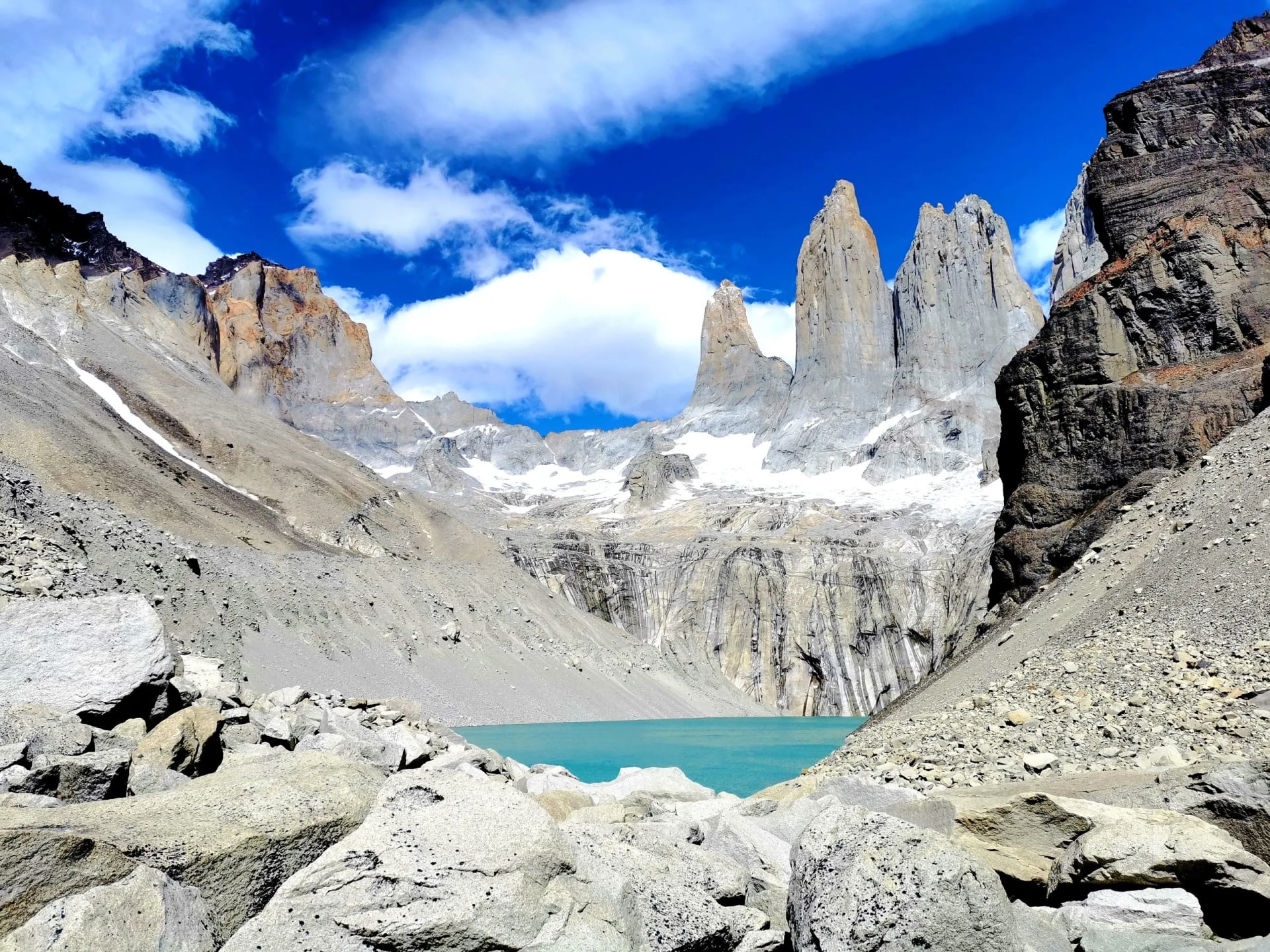
Take the W if you have a week, if this is your first multi-day trek, or if you want a bed and a cooked meal at the end of every stage. It is not a soft option. The towers day alone is an eight-hour round trip and it is the busiest path in the park.
Take the O if you have a fortnight and want the two days of near solitude the W cannot offer at any time of year. What people book as the Torres del Paine O trek is not a harder W, it is the W with a remote section on the front, and the northern camps are basic where the front refugios are comfortable.
Season is the tiebreaker people forget. The W's season is months longer than the O's, so if your dates are fixed in September, October or April the choice has already been made for you. Our W trek itinerary runs across that wider window.
Getting a Place on the Circuit
The single most useful fact about the O is that access is now rationed. CONAF has set a maximum of 100 people a day on the circuit, which is why the northern camps sell out months before the front-side ones do. Book the northern half first and work outwards.
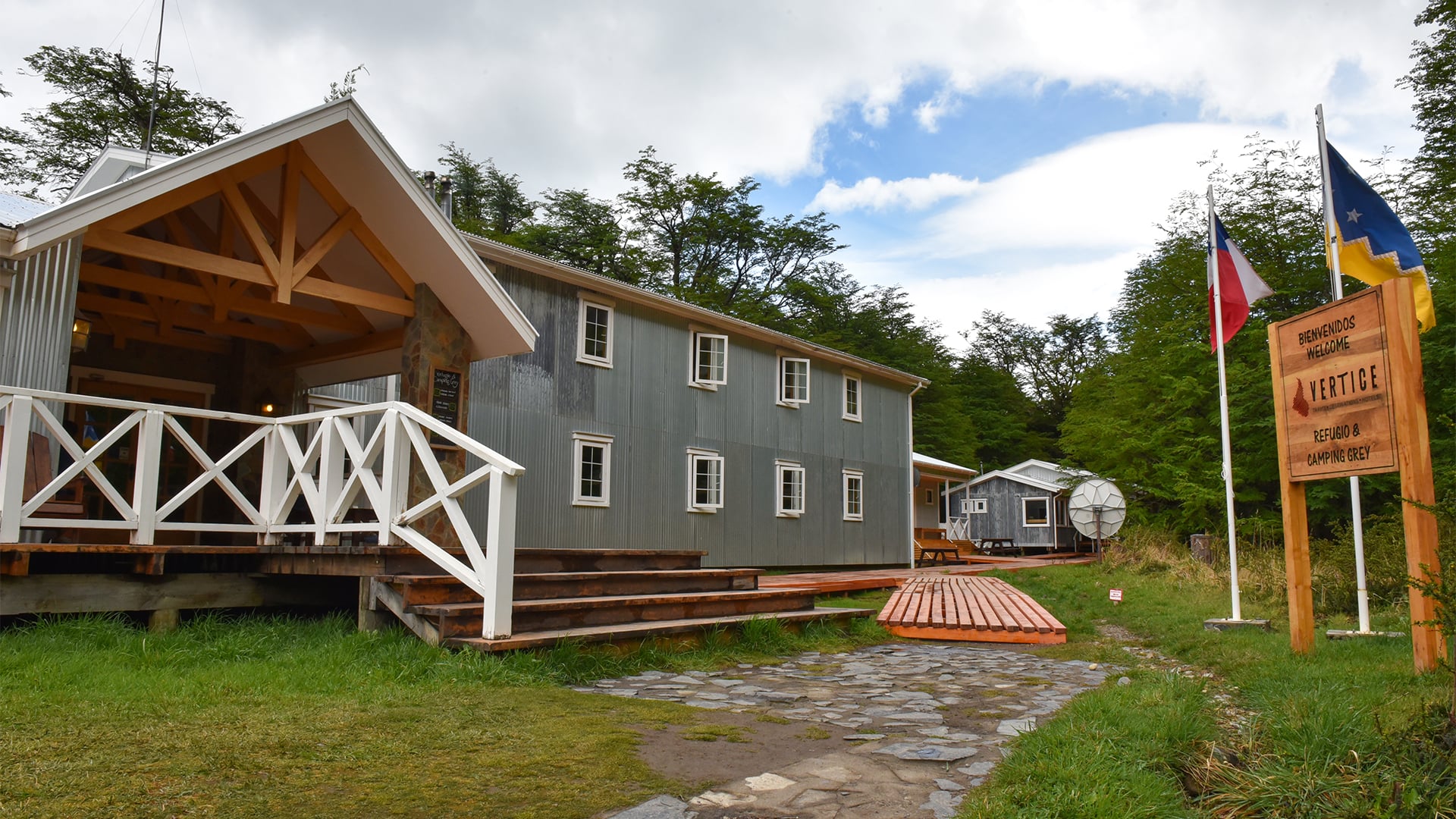
You cannot walk the O without accommodation reserved in advance. The park states that trekkers on the W and the Macizo Paine circuit must reserve their accommodation at the refuges and campsites inside the park, and the only exemptions are day walks and two roadside campsites. Wild camping is not a fallback, because the law governing the park forbids sleeping or eating anywhere not authorised for it.
The awkward part is that the beds are not in one place. Two concessionaires split the circuit between them, Las Torres Patagonia and Vértice Patagonia, while the free camps belong to CONAF. Three separate booking systems have to agree on your dates, and one missing night breaks the chain.
Park entry is a fourth transaction, bought at least 24 hours ahead through CONAF's ticket platform. Registration at the Coirón ranger station is then compulsory on the way in, so carry your confirmations on paper as well as on a phone. There is no signal to retrieve them once you are walking.
This is the part of the O that goes wrong most often, and it goes wrong months before anyone starts walking. Our O circuit trek exists largely to take it off your hands, because the beds and the park paperwork are booked before you fly.
When to Go
The O has a shorter season than the W. The northern half and the pass are usually walkable from November to March, and the exact opening and closing dates are CONAF's call each year rather than a fixed calendar.
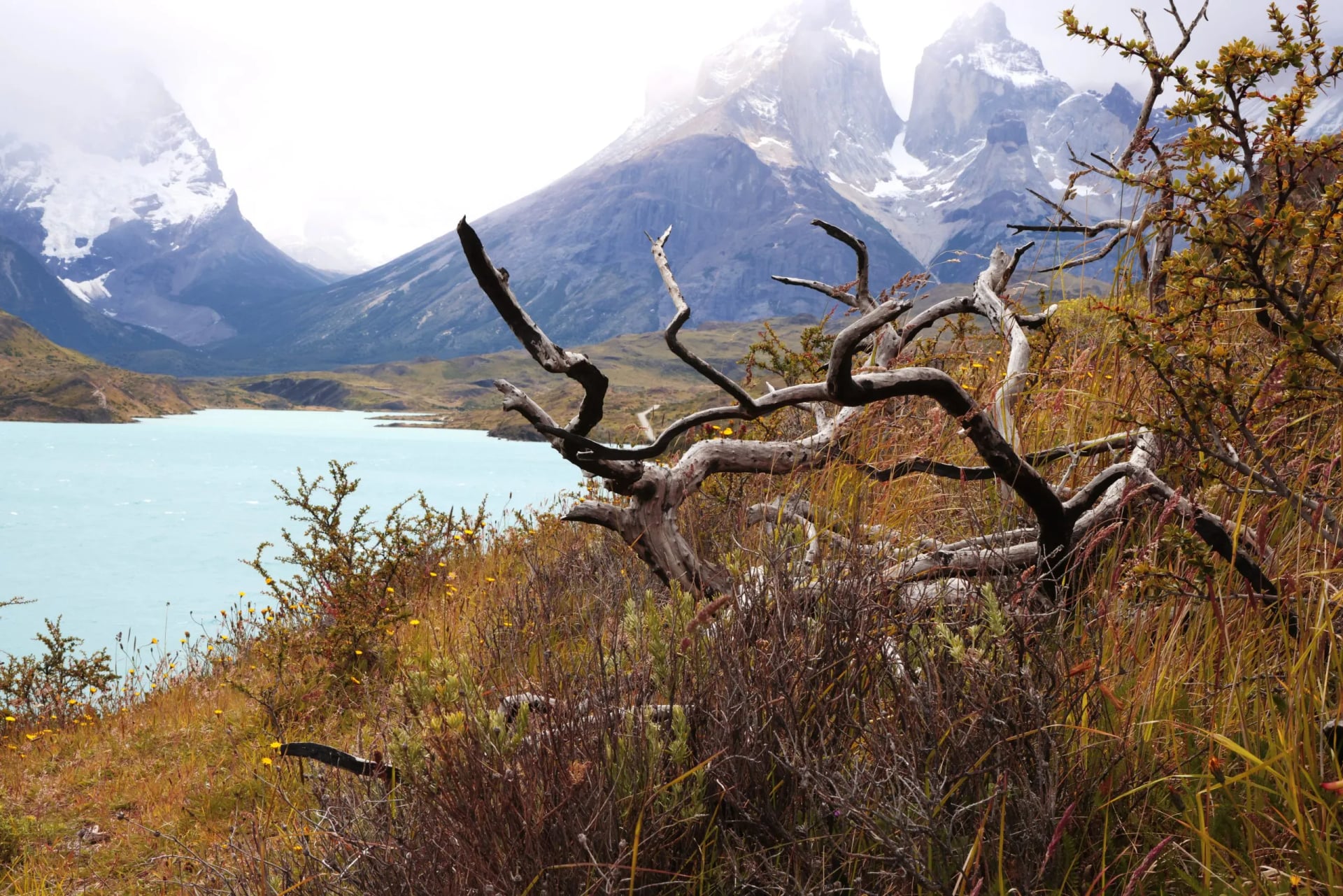
Outside that window the answer is simply no. The Macizo Paine circuit closes for the winter period, which starts in May. During it the W and the towers path stay open only with a certified guide, the right equipment and a 9am entry deadline.
For the 2026-27 season CONAF has kept the circuit and John Gardner Pass closed until 1 November 2026, and reopens them only after a technical and weather assessment. Last season it also ended the summer early, on 26 March 2026, after snow and ice built up on the trail.
In the southern winter you are planning for next season rather than this one. Reservations usually open between April and June, and the northern camps are the first to go.
Within the season the trade is wind against daylight. December and January give the longest days and the strongest wind. November and March are calmer and quieter, with the risk that the back section opens late or shuts early.
Late March also runs into the refugio calendar. Refugio Los Cuernos, one of the last nights on the loop, closed on 30 March last season, so a late-March start can reach it after it has shut.
Know Before You Arrive
Life on the circuit is simple: you drink from the streams, cook only at the marked camping areas and sign in with the rangers as you go.
Registration and sign-out. Report at every ranger station you pass, and sign out at Perros and Paso before leaving. This is the search-and-rescue trigger, not a formality.
Fires and stoves. Lighting a fire anywhere in the park is a criminal offence, and portable stoves are legal only inside the marked camping areas. The ranger stations at Dickson, Los Perros, Grey and Paine Grande allow no heat source at all, which catches out anyone assuming the hut is where you cook.
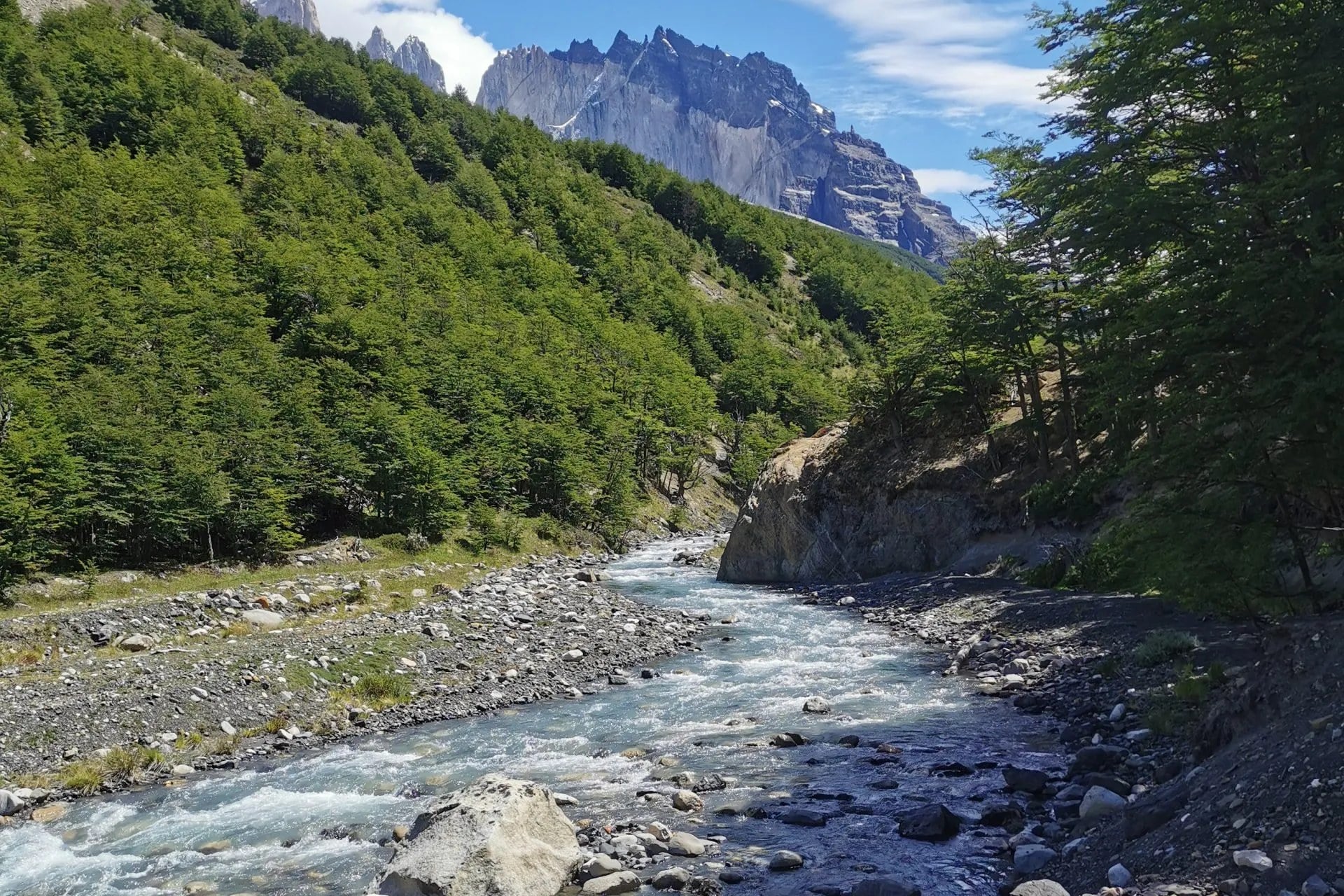
Water and rivers. Stream water on the circuit is generally drinkable, so the weight goes on layers rather than litres. The park warns that crossings turn dangerous once the water is above knee height, and meltwater rises through the afternoon.
No signal, and no shortcuts. There is no mobile or internet coverage on the interior trails. The park also notes that most fatalities happen off the marked path, so a printed O circuit map earns its place in the lid of the pack. Read the park's current recommendations before you fly.
Getting there. Punta Arenas is the airport, Puerto Natales is the last town, and the park gate is a few hours beyond it. Buy park entry online in advance through CONAF's ticket platform rather than at the gate.
Our O Circuit Trek
Our version of the circuit is self-guided and hut-to-hut, with reserved beds, luggage moves where the route allows them, and the park paperwork done before you arrive. The full trip list carries current dates.
Torres Del Paine O Circuit
Days: 10 days, 9 nights, Punta Arenas to Punta Arenas
Walking: 7 days, 135 km, about 5,700 m of ascent
Longest day: 35 km to Camp Dickson
High point: John Gardner Pass, roughly 1,200 m
Season: November to March
Fitness: 4 of 5, technical 3 of 5
Nights run from a hotel in Punta Arenas through Refugio Torre Central, then the northern camps at Dickson and Los Perros, then Camp Grey, Vertice Paine Grande and Refugio Los Cuernos before the towers day. The northern camps sell out first, so this is a trip to commit to early rather than to decide on in spring.
Frequently Asked Questions
How difficult is the O trek in Patagonia?
Nothing on it is technical, and in season it needs no equipment beyond boots and poles. The difficulty is seven consecutive days, 5,700 m of climbing and the same again in descent, in weather that turns inside an hour. We rate it 4 of 5 for fitness, against 3 for the W.
How many days to do the O trek Patagonia?
The park's own figure is eight to ten days. Eight-day itineraries usually start and finish at the park gate, while ten-day trips include the travel days at either end. Allow ten days door to door, plus one spare in case the pass closes.
How difficult is the W trek in Patagonia?
Easier, but not easy. Four walking days, about 67 km and roughly 2,570 m of ascent, with a bed and a cooked meal at the end of each stage. The towers day is the one that hurts, at 20 km and 1,150 m of climb.
What happened on the O trek?
On 17 November 2025 a violent storm hit walkers crossing John Gardner Pass and five people died. Winds were reported at around 193 km/h, roughly double the forecast, and ranger cover was reduced that weekend by Chile's compulsory election vote. CONAF reopened the circuit in stages from December 2025 with a daily cap of 100, one-way walking and rangers posted in the exposed sectors.
Do you need crampons on the O circuit in December?
No. In December the pass is normally clear enough for boots and poles, and micro-crampons are a winter requirement on the trails that stay open outside the season. Poles matter more than crampons here, because of the long descent off the pass.
Can you walk the Torres del Paine O circuit self guided?
Yes, and that is how most people walk it in season. A guide is only compulsory in the winter period, when the circuit itself is shut anyway. What is compulsory all year is having every night booked before you enter, which is the part most worth handing to someone else.
Plan with a hiking expert
Free advice from a team that knows these routes inside out - real people, not a bot

HASSLE-FREE
We handle itineraries, accommodations, and anything else you prefer not to deal with, so you can enjoy a carefree hike.

BOOK WITH CONFIDENCE
We are a financially protected company, fully bonded and insured, keeping your money safe and allowing you to travel with confidence.

TRIED & TESTED ADVENTURES
Only the best hut to hut hikes in the world, cherry-picked by our local team with an in-depth knowledge.

UNBEATABLE SUPPORT
Our 24/7 customer support is where we show our passion, bringing you a better experience by making your well-being our number one priority.